
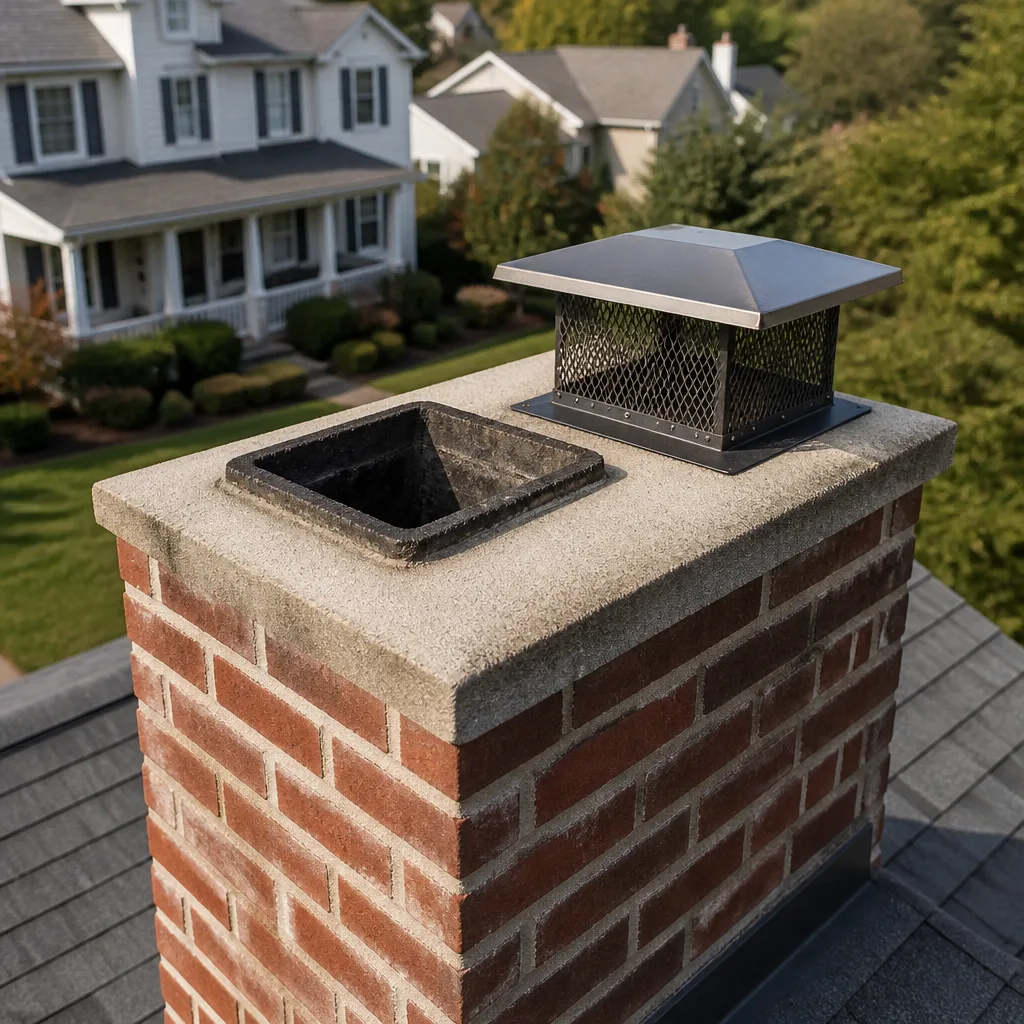
 Sweep & inspection
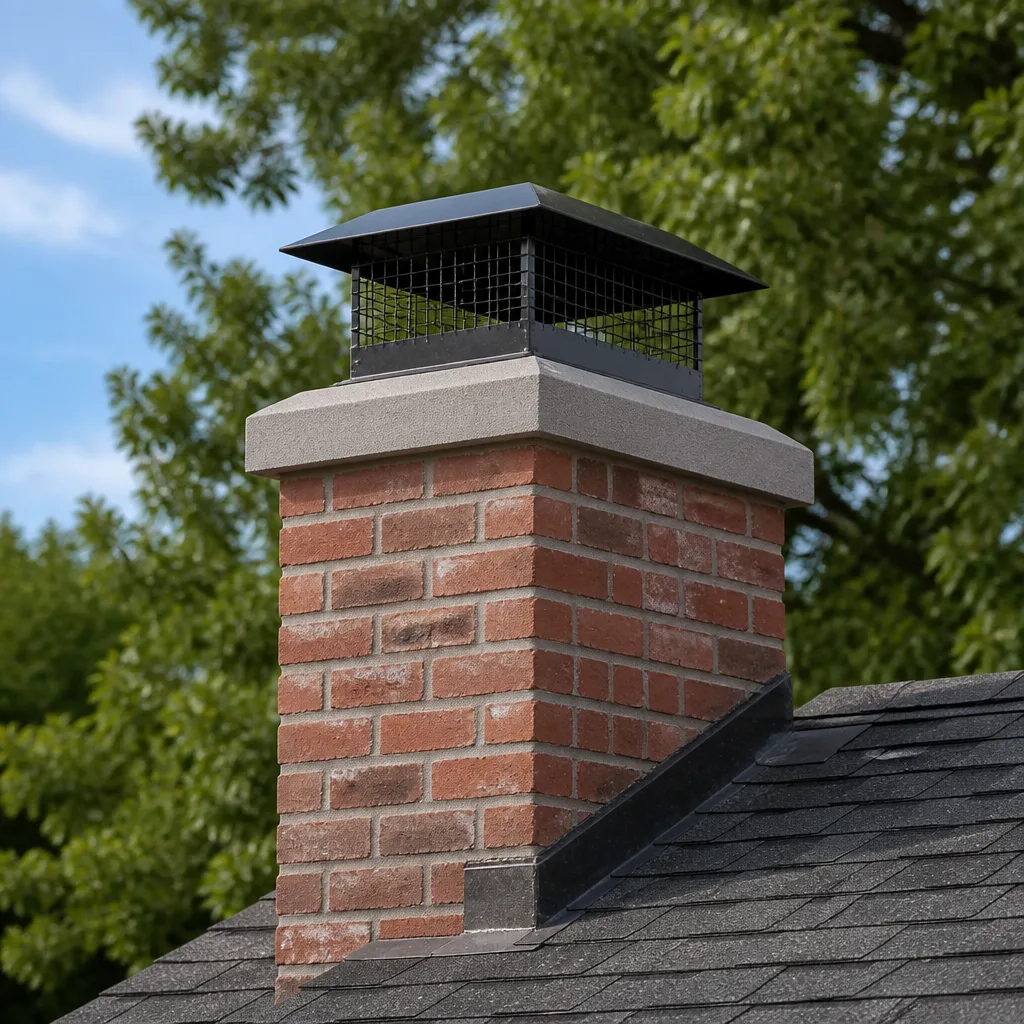 Caps & crowns
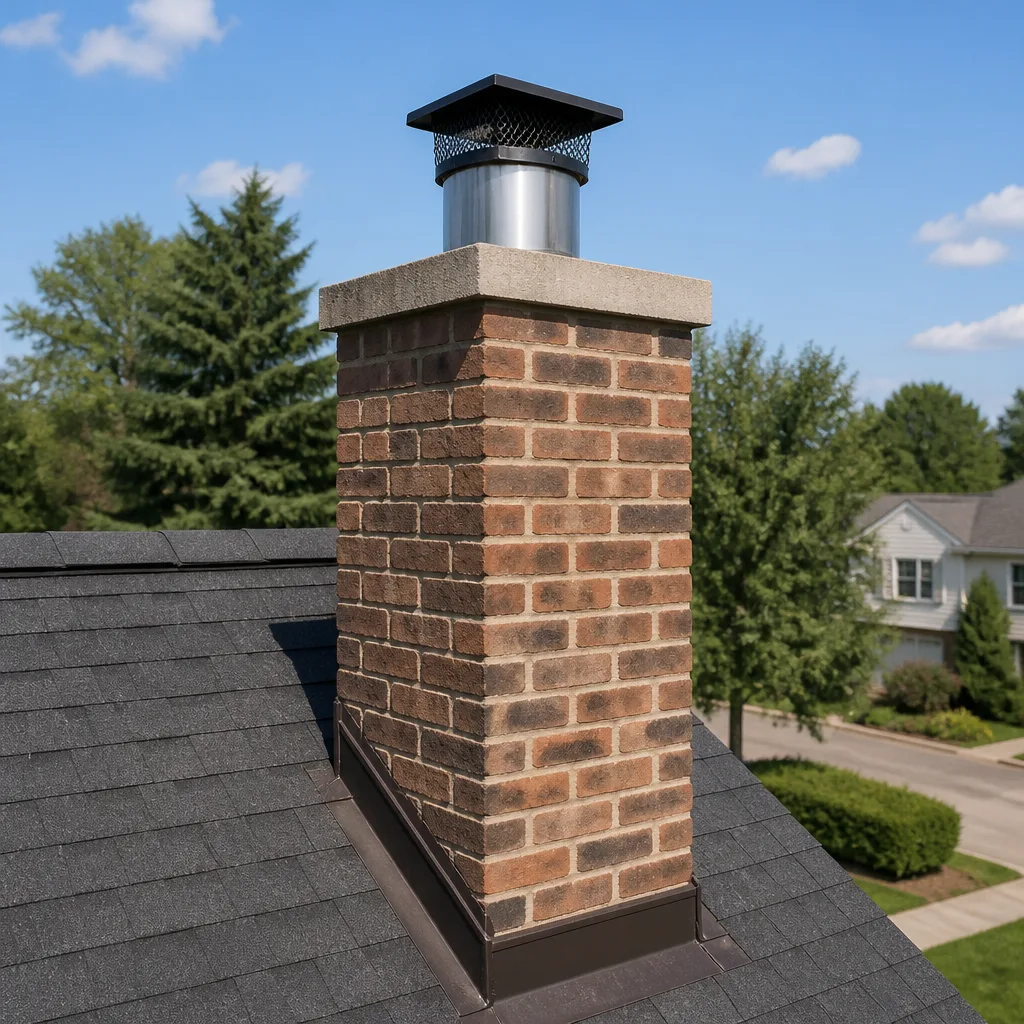 Flue relining
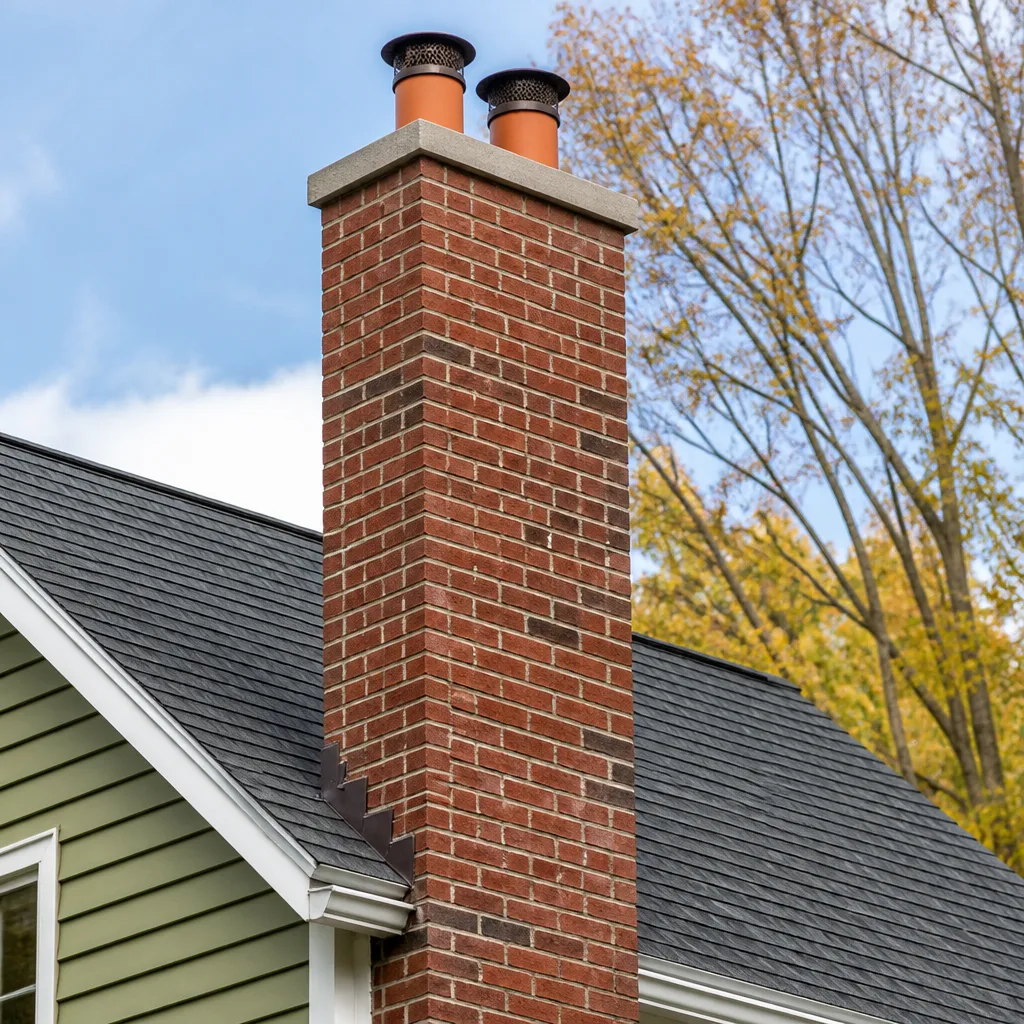 Masonry repair
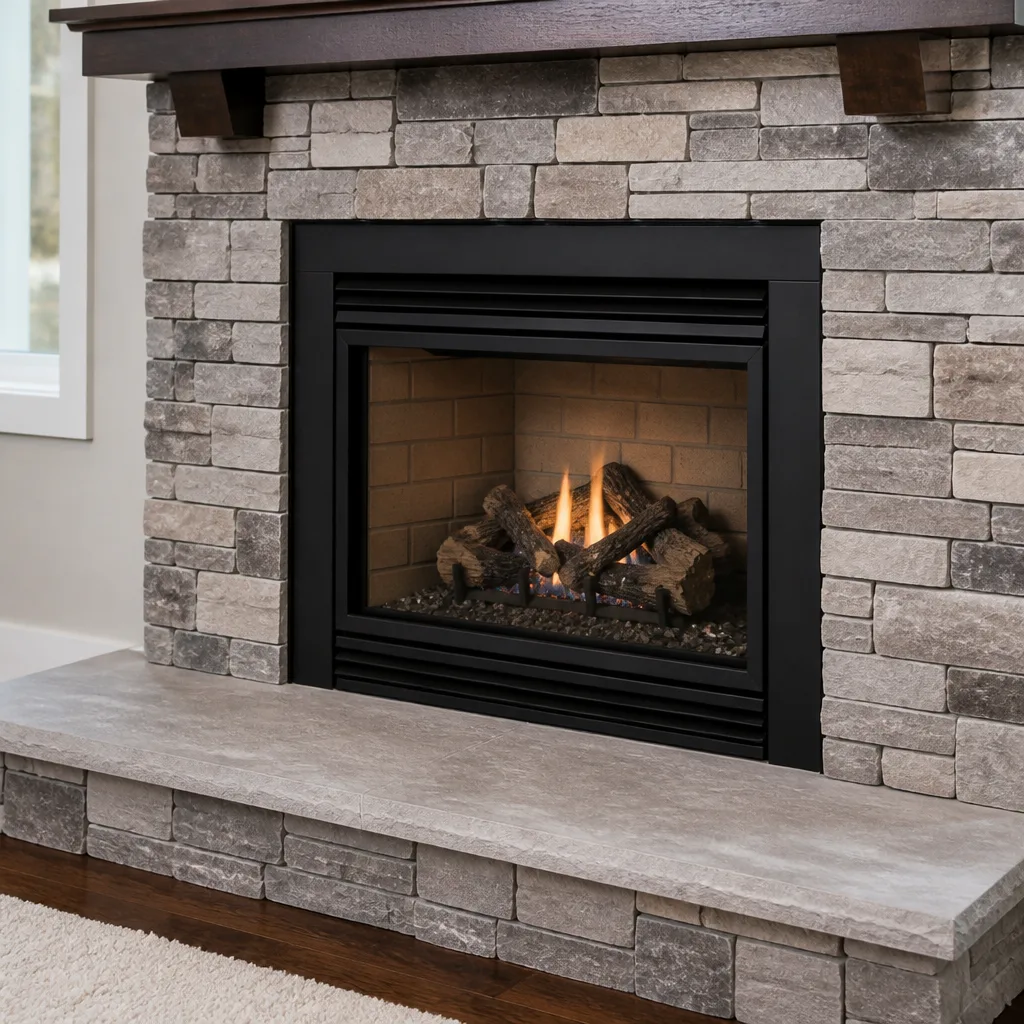 Gas fireplace service
Level 1 sweep and inspection to the NFPA 211 annual standard - flue, crown, cap, and flashing checked and photographed
Chimney sweep logs do not sweep chimneys. They loosen some creosote - which then falls where a brush and vacuum still have to collect it.
HeatShield Chimney Cap Installation: The Orlando Owner’s Guide
We stock and install HeatShield-compatible chimney caps throughout Orlando, with most installations running between $240 and $480 including the cap, mounting hardware, and labor. Same-week scheduling is standard, and we carry common HeatShield sizes on the truck so a single visit is usually all it takes. Homeowners typically find us after a heavy Florida storm: water streaks on the ceiling near the fireplace, a rust stain running down the chimney chase, or the sound of birds waking up somewhere in the flue. The cap is the first line of defense against all three, and when it fails in Orlando’s humidity and storm season, it fails fast.
Which HeatShield Models This Applies To
If your chimney was built or relined with a HeatShield system, the cap that fits it is specific to the liner diameter and the termination style. HeatShield ceramic flue liners are installed in both masonry and prefabricated chimney setups, and the cap assembly differs depending on whether you have a round flue tile, an oval, or a multi-flue configuration. The wrong cap leaves gaps that let rain, embers, and animals through, even if it looks right from the ground.
The easiest way to identify what you need is to look for the HeatShield label on the crown plate or the underside of the existing cap, or measure the inside diameter of the flue opening at the top. Common residential sizes we install in Orlando run from 6 to 13 inches in diameter, with 8-inch and 10-inch round caps being what we see most often on HeatShield-equipped homes in Dr. Phillips, Winter Park, and Baldwin Park. One compatibility gotcha we run into regularly: HeatShield smooth-wall ceramic liners do not accept standard twist-lock caps designed for corrugated stainless liners. The cap must seat onto the crown or chase top with a proper base plate and mechanical fasteners, not a friction fit. We use OEM HeatShield caps when the homeowner wants an exact match, and quality aftermarket equivalents from Gelco or Olympia when the liner is in good shape and the budget is tighter. Both get the same install workmanship, and we’ll tell you plainly which one makes sense for your setup.
Styles & brands we work with
Signs Your HeatShield Chimney Cap Installation Is Failing
- Water stains on the ceiling or wall near the fireplace. This is the most common call we get in Orlando after summer storms. A failed cap seal or a rusted crown plate lets rain run down the outside of the liner and into the attic or chase. By the time you see the stain, the leak has usually been active for a few weeks.
- Rust streaks on the chimney crown or chase top. Florida’s humidity plus salt air near the coast accelerates rust on galvanized cap components. If the cap is flaking or the mesh screen is pulling away from the frame, it is no longer doing its job and needs replacement rather than patching.
- Debris, leaves, or nesting material inside the firebox. A cap with a damaged or missing mesh screen is an open invitation to Orlando’s tree squirrels and birds. We have pulled enough pine straw and squirrel nests out of flues to know the cap is almost always the entry point.
- A draft smell or visible smoke backing into the room. A cap that is partially blocked by rust, creosote, or a collapsed screen restricts airflow and changes the pressure balance in the flue. What feels like a drafting problem is often just a cap that has quietly failed up top.
- You can hear wind whistling through the chimney on gusty days. A loose or improperly seated cap creates turbulence and noise. It also allows embers to escape on the windward side, which is a genuine fire-safety concern in dry winter months here in Central Florida.
See the difference
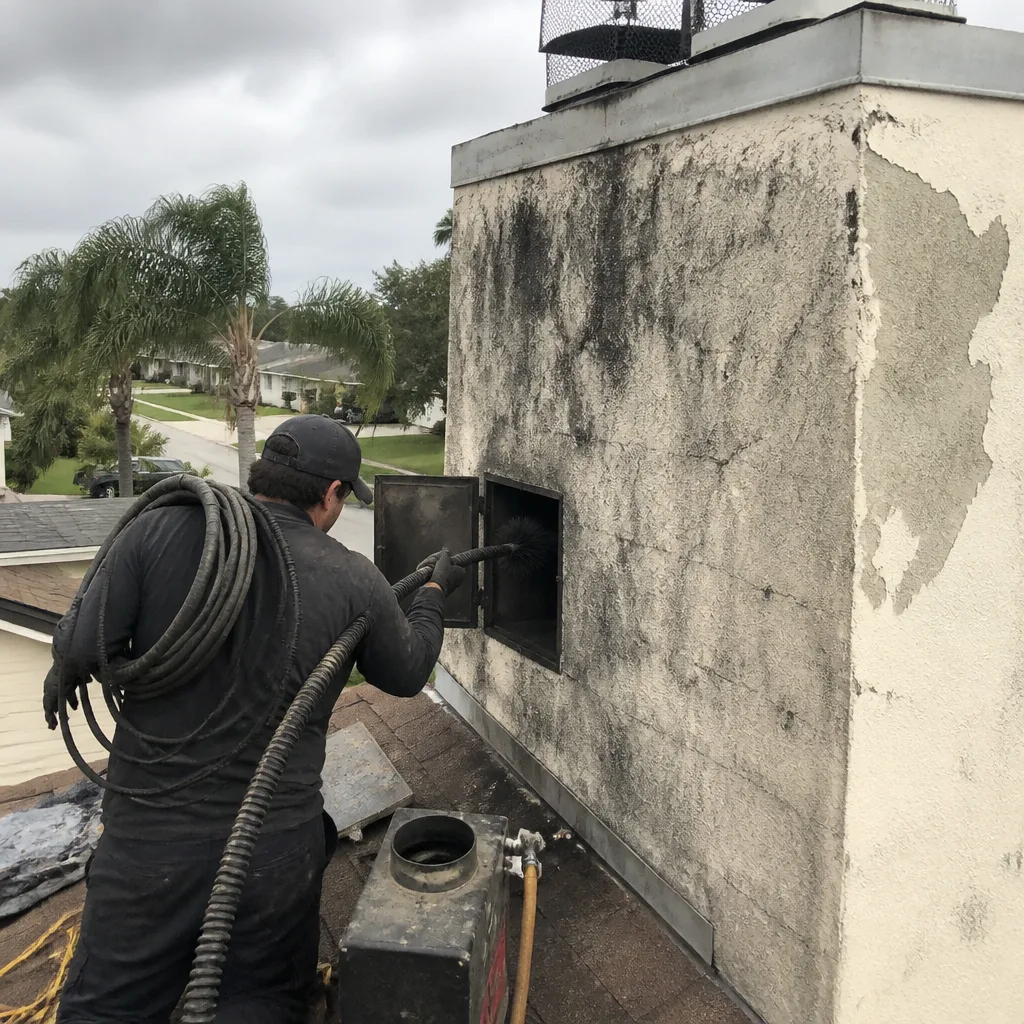 Before
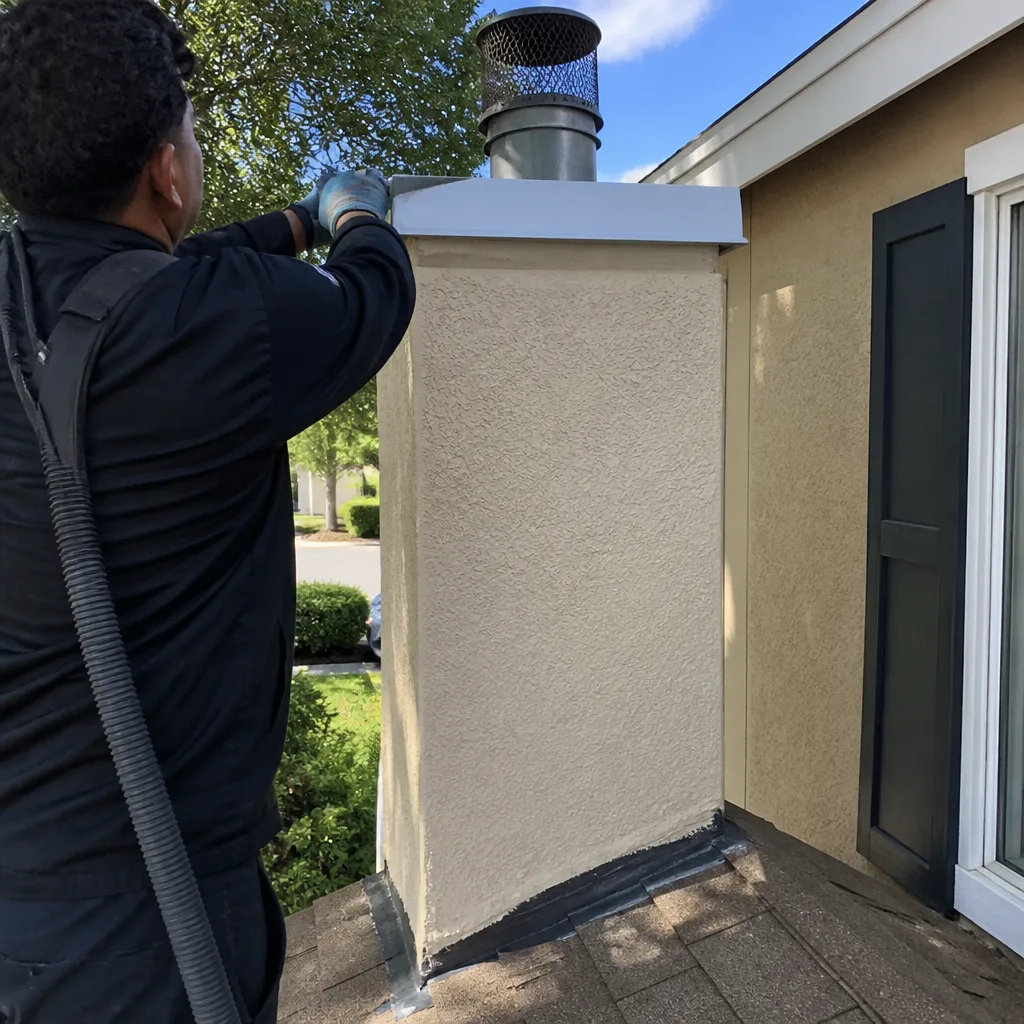 After
After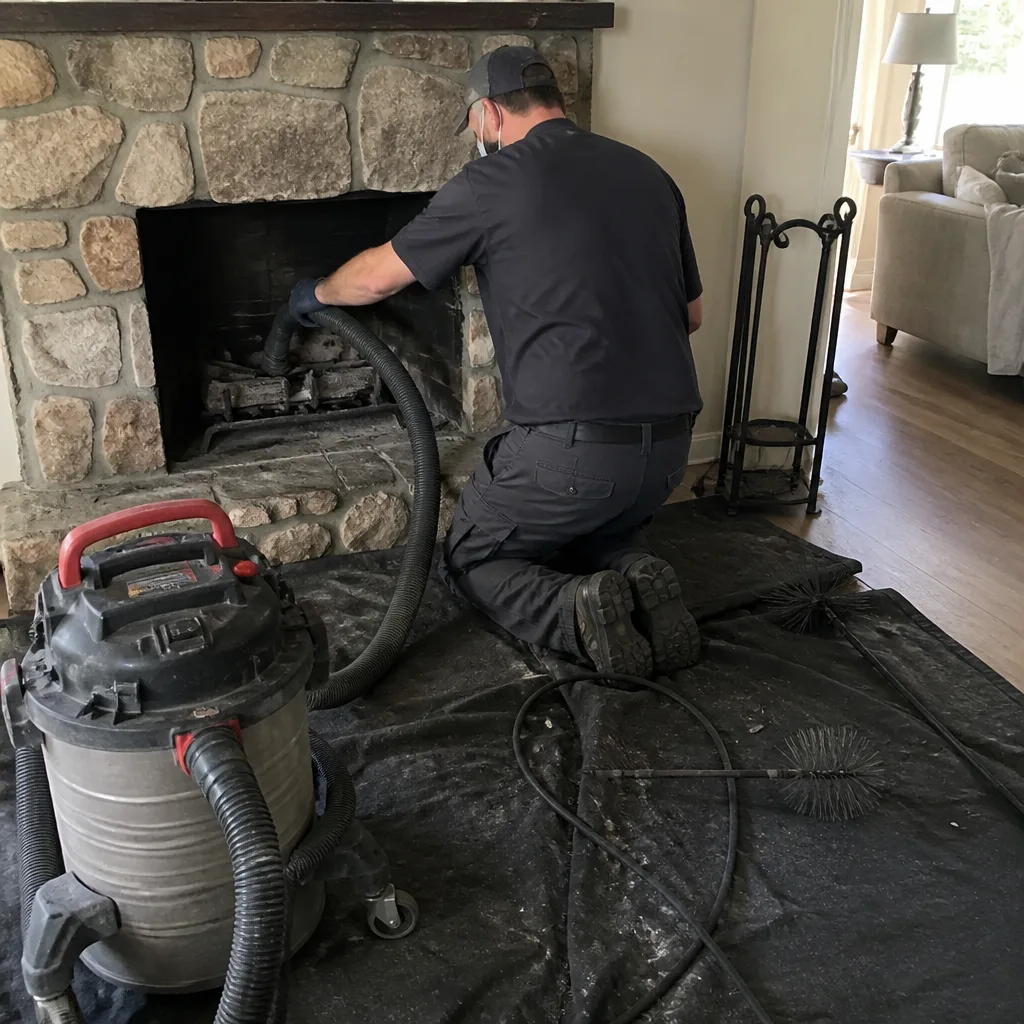 Before
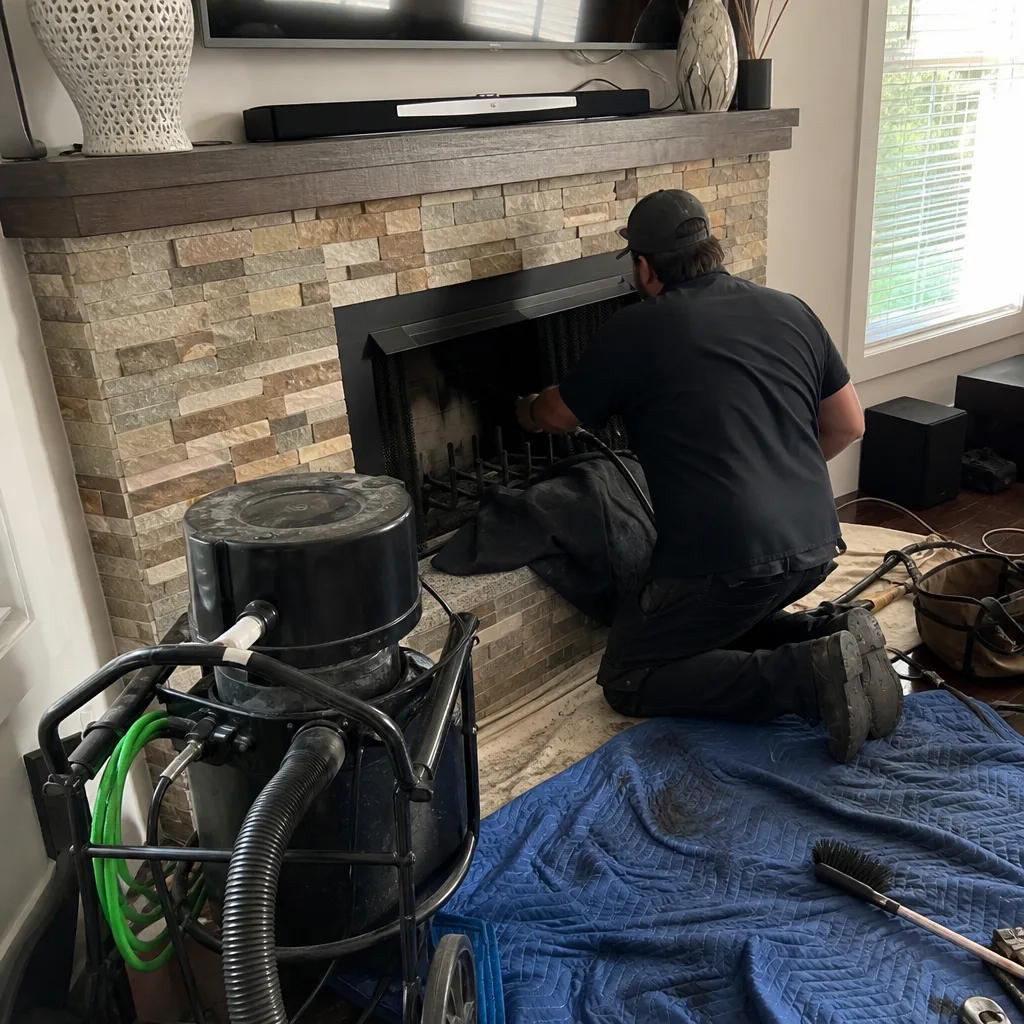 After
After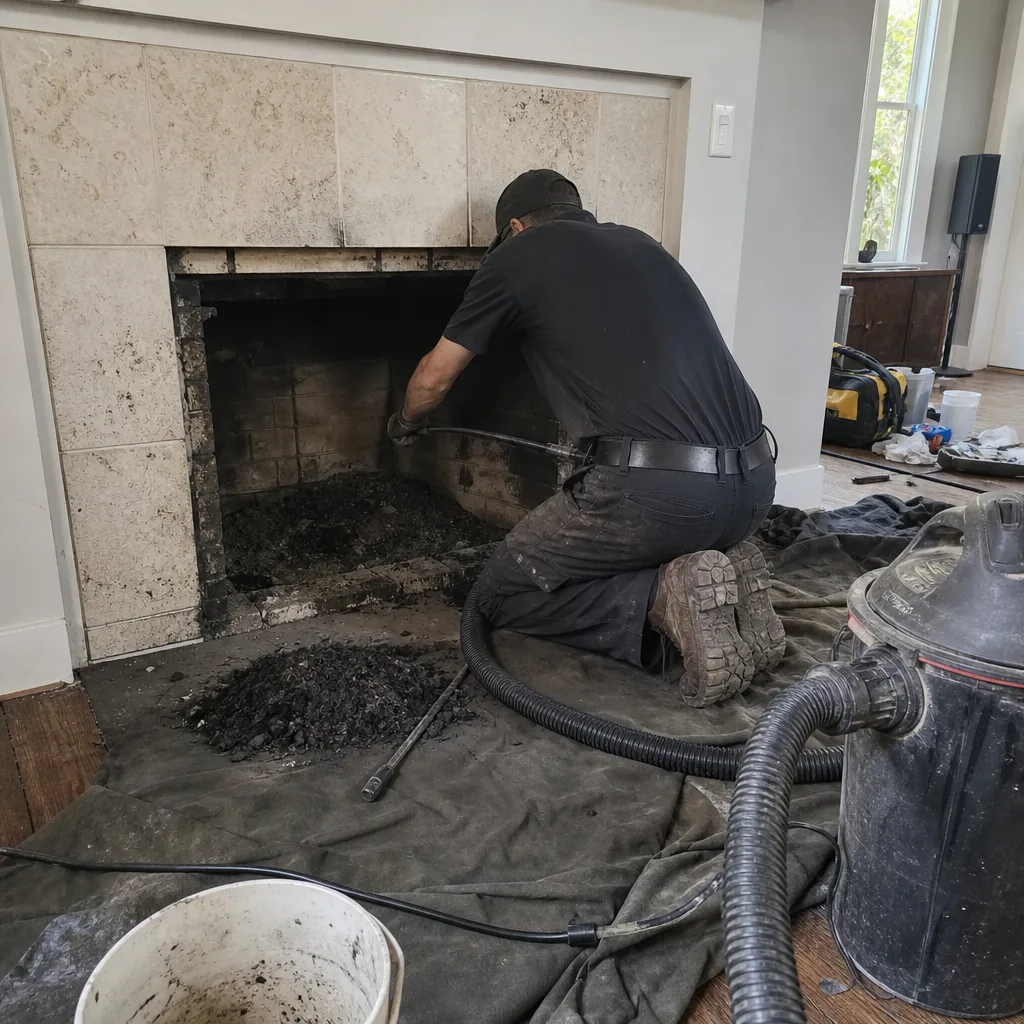 Before
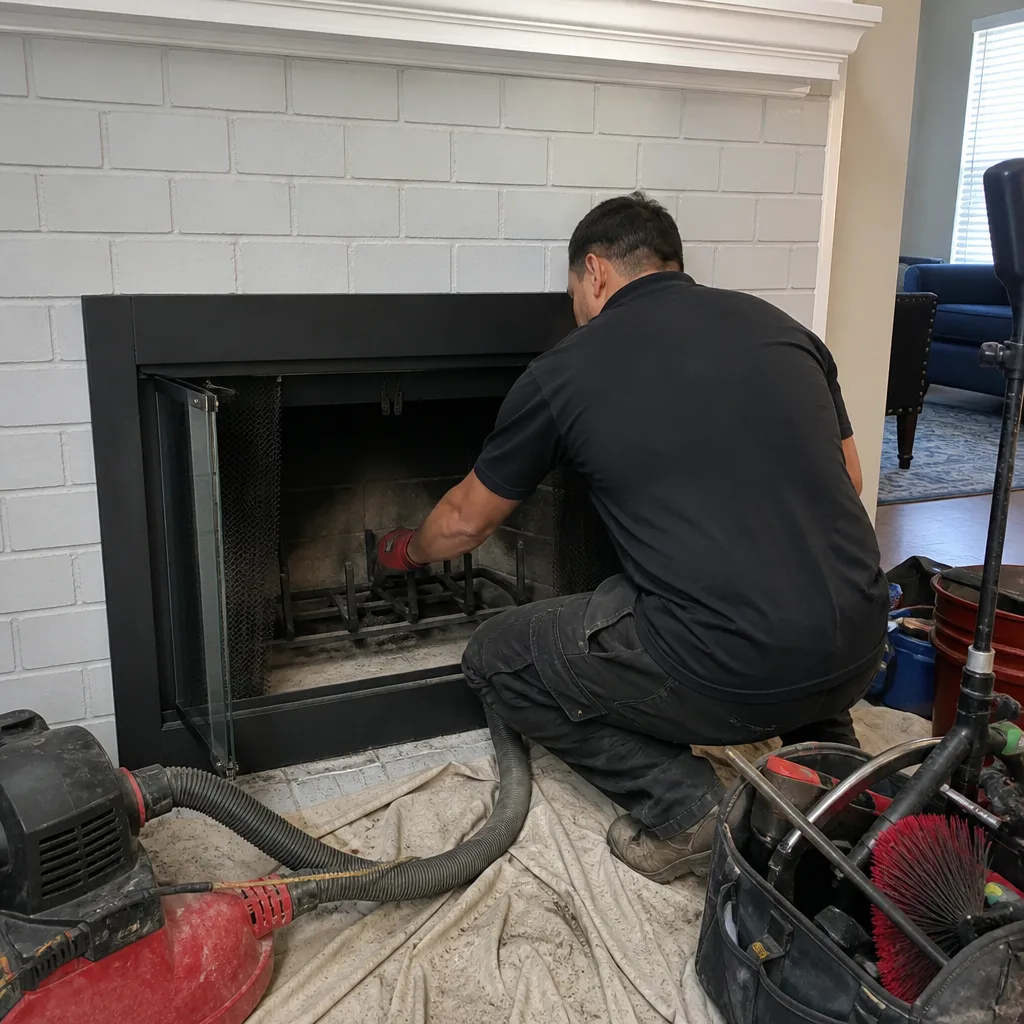 After
AfterReplacement Cost & What’s Included
In Orlando, a HeatShield chimney cap replacement and installation on a single-flue home runs between $240 and $480 installed. Multi-flue caps, custom chase-top covers, and caps for oversized commercial flues push the upper end higher, but the range above covers the large majority of residential jobs we do.
Here is what the price includes on every cap install:
- The cap assembly itself, sized to your flue and matched to your HeatShield liner.
- Mounting hardware rated for outdoor exposure: stainless steel screws and a proper base plate, not cheap galvanized fasteners.
- Removal and haul-away of the old cap.
- Visual inspection of the flue top and crown while we are up there, with photos shared to you before we come down.
You get a written price before any work starts, so there is no surprise at the door. And every cap replacement is covered by our 365-Day Done Right Promise: if the install is not right, we make it right. No fine print, no runaround.
DIY or Call Us?
If you are comfortable on a ladder and just want to know what you are dealing with, you can safely check a few things from the ground: look for visible rust on the cap, a leaning or tilted cap, missing mesh screen panels, or water staining around the crown. What you should not do is climb onto a two-story Orlando roof with a drill and a replacement cap you bought online. Most chimney tops here are steep-pitched, tile roofing is genuinely slippery, and a fall from that height is a life-changing injury. The cap also has to seat correctly against the HeatShield liner or you have just created a new leak and a false sense of protection.
Beyond safety, the common DIY mistake we correct most often is installing a cap that does not match the flue diameter, leaving a gap around the liner that still lets water in. For a $240 to $480 job done right, with our crew doing the roof work, taking photos, and standing behind the install for a full year, the trade-off is not worth it. Call us at (850) 940-3442 and we will get you a straight answer.
FAQs
In Orlando’s climate, expect 8 to 12 years from a galvanized steel cap and 15 to 20 from stainless. What shortens that lifespan here is not cold weather but humidity, salt air, and UV exposure, which eat through galvanized coatings faster than in drier climates. Call (850) 940-3442 and we will tell you honestly whether yours can wait another season.
Rarely. The failure point on most HeatShield caps is rust perforation or mesh screen separation, and once that happens, patching is a temporary fix that costs nearly as much as a proper replacement. We will tell you plainly if yours is repairable, but in most cases a new cap is the honest answer. Call us for a free estimate.
A standard single-flue cap swap takes 45 to 90 minutes once we are on site. That includes ladder work, old cap removal, new cap mounting, and a photo report of the flue top before we pack up. Call (850) 940-3442 and we can usually get you scheduled within the week.
Yes. Technicians at Kindling Chimney Orlando carry common 6, 8, 10, and 13-inch round caps compatible with HeatShield liners, along with base plates and stainless mounting hardware. If your chimney needs a custom size or a multi-flue setup, we can order it and have it installed within a few days. Call us at (850) 940-3442 and we will verify fit before you pay a dime.
Know what’s in your flue before the first fire of the season; everything else follows from that. Whether you need a HeatShield cap matched to your existing liner, a DuraFlex or Gelco-compatible alternative, or you just want us to look at what is happening up top, Danny Cortes and the Kindling Chimney Orlando team are easy to reach. A real person answers the phone 24 hours a day, seven days a week. Call (850) 940-3442 for a written quote before any work begins.
Written by Danny Cortes, Owner, Kindling Chimney Orlando at Kindling Chimney Orlando, serving Orlando and nearby areas.