
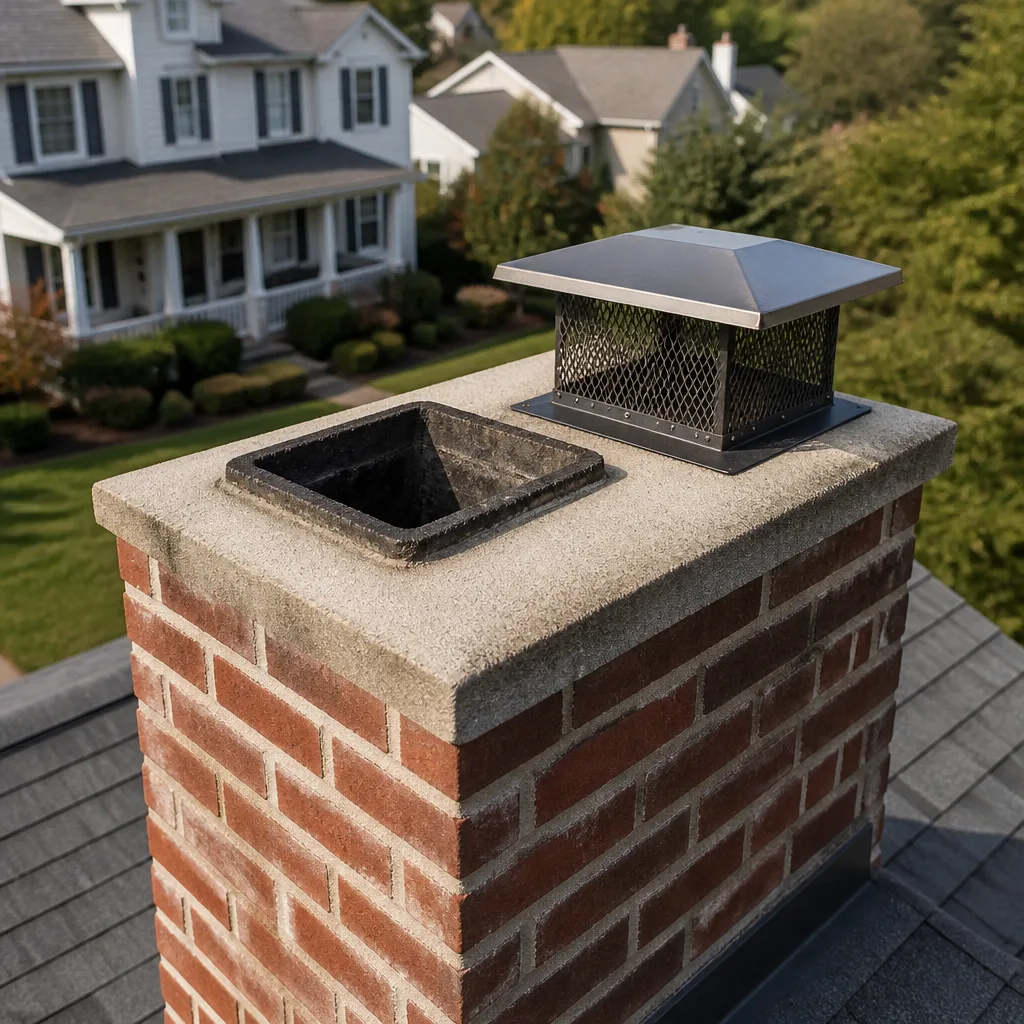
 Sweep & inspection
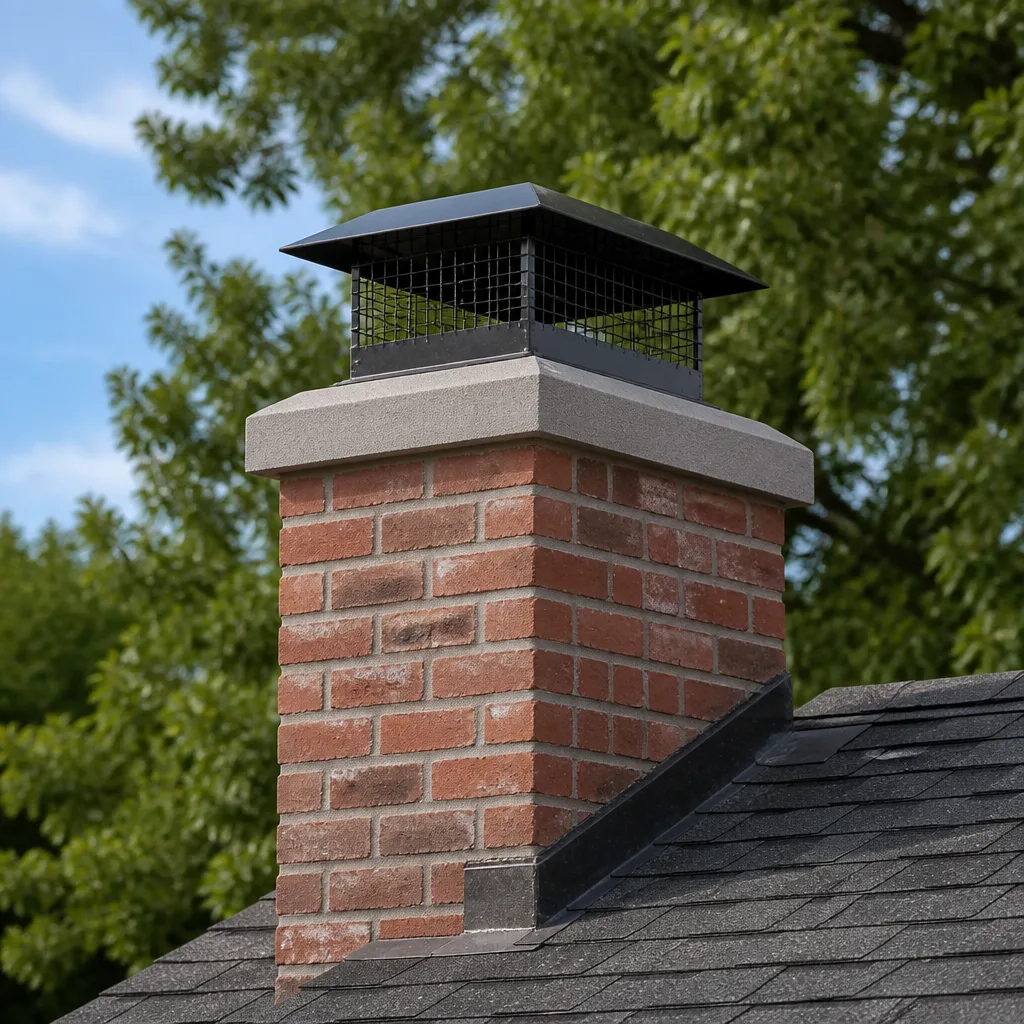 Caps & crowns
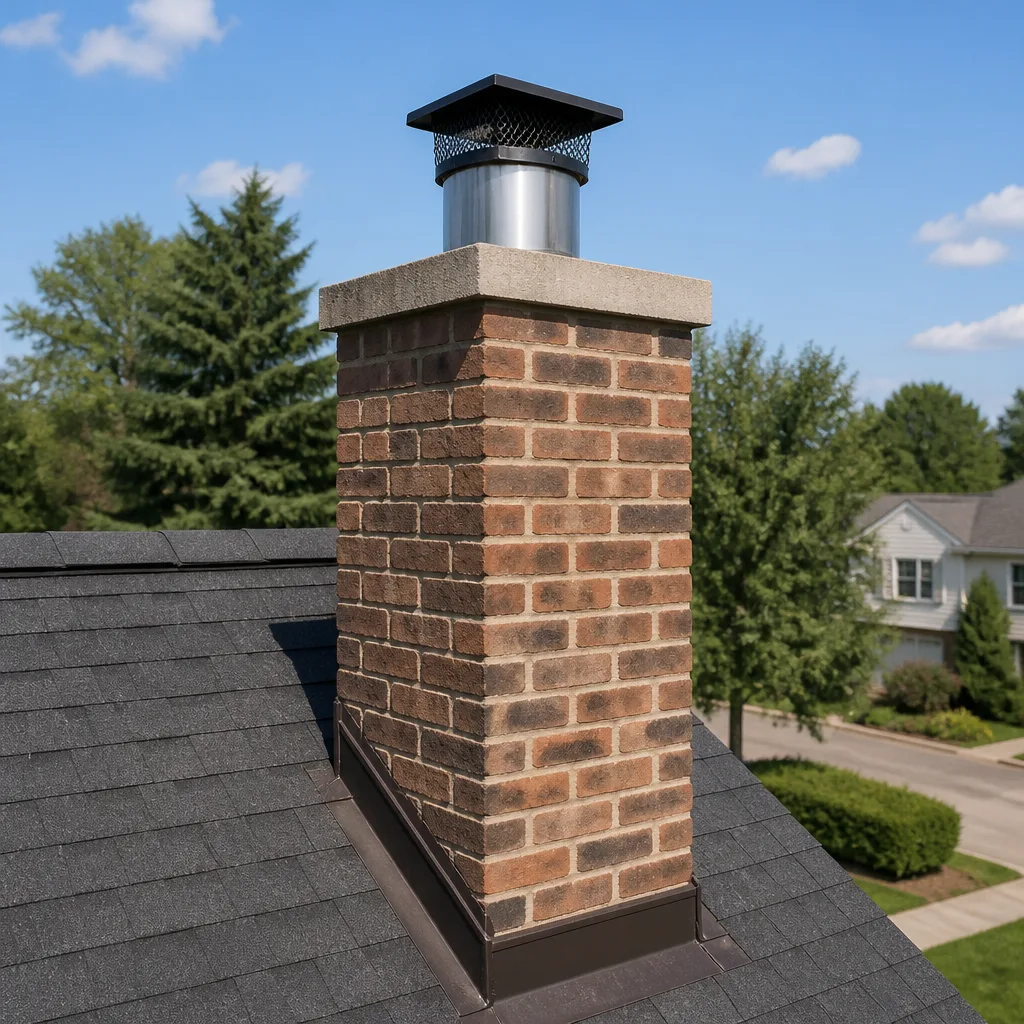 Flue relining
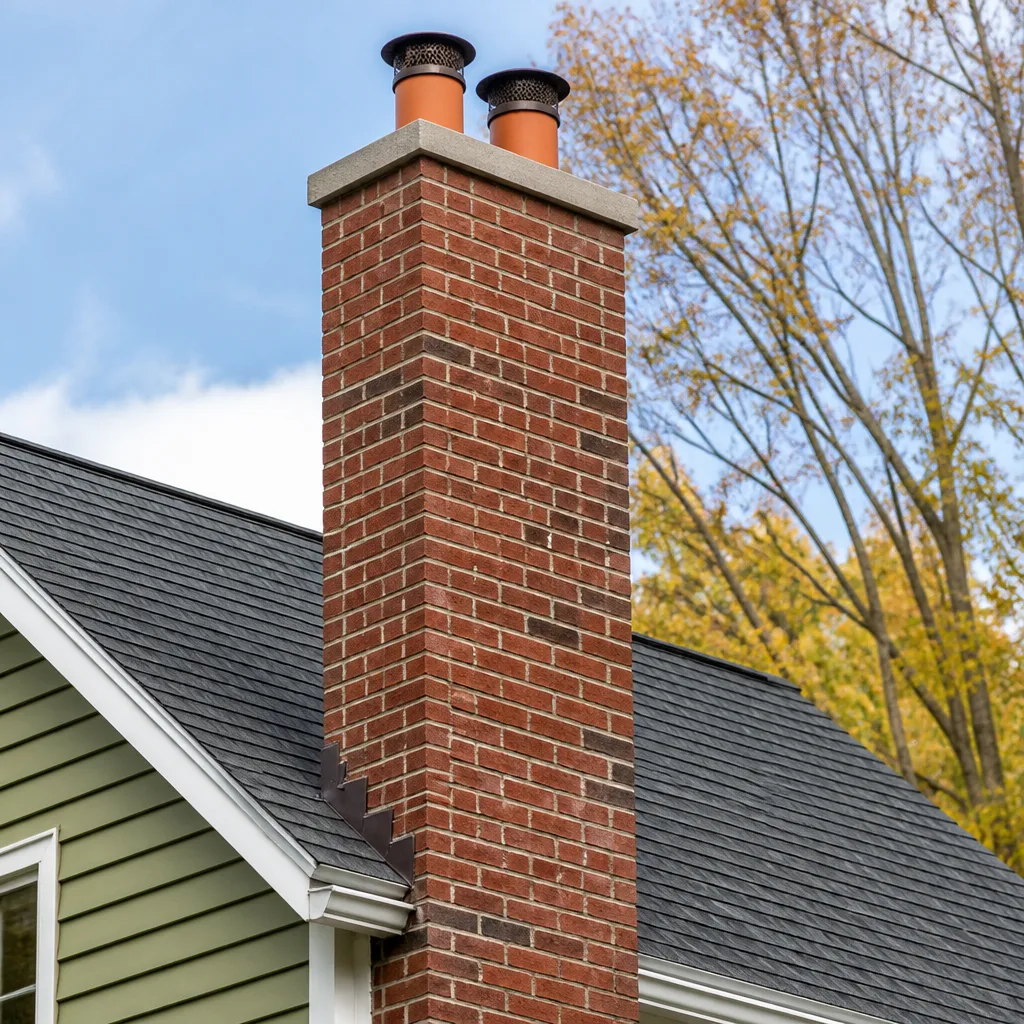 Masonry repair
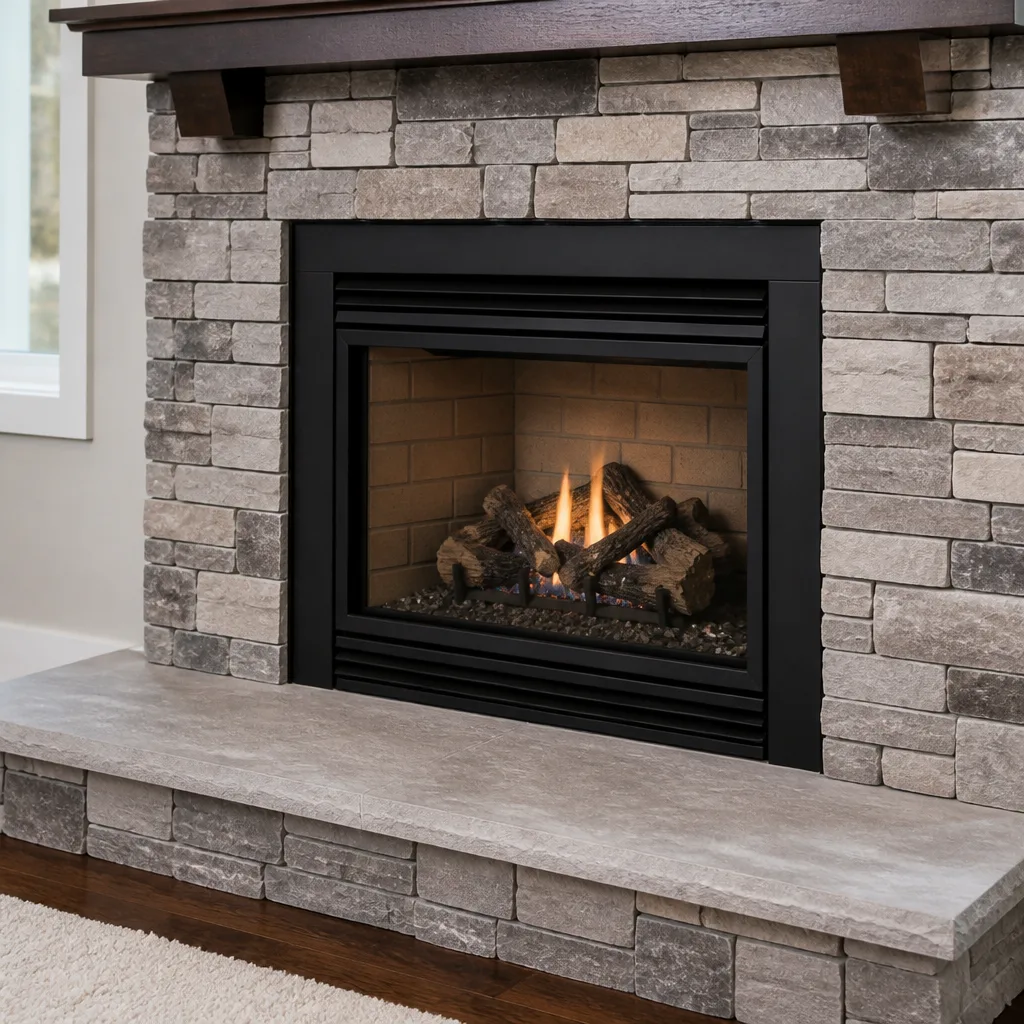 Gas fireplace service
Level 1 sweep and inspection to the NFPA 211 annual standard - flue, crown, cap, and flashing checked and photographed
Chimney sweep logs do not sweep chimneys. They loosen some creosote - which then falls where a brush and vacuum still have to collect it.
Copperfield Chimney Cap Installation: The Orlando Owner’s Guide
If your Copperfield chimney cap has rusted through, pulled loose in a storm, or started letting rain into the flue, we can replace it. We install Copperfield and Copperfield-compatible caps throughout Orlando, and most jobs run between $285 and $540 installed depending on flue size, roof access, and whether we’re replacing just the cap or also the mounting base. The reason a failed cap gets noticed is usually water on the hearth, a draft you can feel even with the damper closed, or the sound of dripping inside the firebox after a hard Orlando downpour.
We stock Copperfield replacement caps on the truck along with the stainless steel mounting hardware they need, so in most cases we can do the swap in one visit. The cap itself is a simple part, but matching it to your flue is where the care comes in, and that’s what this page explains.
Which Copperfield Models This Applies To
Copperfield makes caps for a few different flue setups, and the part that fits one chimney will not reliably fit another. The main split is between caps made for round flue tiles and caps made for rectangular or square flue tiles. Round Copperfield caps are built around a standard set of flue inside diameters, usually 7, 8, 9, 10, 12, and 13 inches, with the legs of the cap sliding inside the flue tile. Rectangular Copperfield caps, by contrast, are sized by outside flue dimensions and clamp or screw to the outside of the tile or the chase top. If you have a prefabricated fireplace with a metal chase cover, Copperfield caps typically bolt to the top of the chase cover itself, and the leftover opening is sealed against the cap’s base.
The easiest way to confirm what you have is to look at the flue opening from the roof or the chase top. You’ll find the flue measurement in the fireplace manual as well, usually under “termination” or “venting.” For older masonry chimneys, many Orlando homes have unlined or clay-tiled flues, which is where the square cap with outside-mount legs comes in. We carry both mounting styles on the truck for Copperfield jobs, and we use OEM Copperfield caps when the fit is exact. For older chimneys with non-standard flue openings, a quality aftermarket stainless cap built to the same gauge as OEM often fits better, and we’ll show you the measurement difference before we quote it.
One compatibility gotcha we see often in Orlando: a cap that fit the original flue tile won’t seat correctly once the top course of tile has spalled from years of wet-season heat and rain. That’s common on homes in College Park and Winter Park with original 1950s-to-1970s masonry. The cap isn’t the problem; the seat is. We’ll measure the opening and, if the tile lip is no longer sound, we may recommend a stainless steel cap that mounts to the outside of the tile while a new chimney crown is placed around it.
Kindling Chimney Orlando is an independent service provider, and we’re not affiliated with Copperfield. We choose their caps because the stainless steel holds up well in Florida humidity, and because their leg and clamp design is easier to seat cleanly than many generic caps we’ve pulled off Orlando chimneys.
Styles & brands we work with
Signs Your Copperfield Chimney Cap Installation Is Failing
- Water inside the firebox after rain. The most common call we get in Orlando. A cap that has shifted or rusted through lets rain run straight down the flue, and it will show up as dampness on the firebrick or a small puddle at the base of the firebox. The flue may be fine, but the cap isn’t doing its job.
- A rust trail running down the flue tile or chase cover. Copperfield caps are stainless, but the mounting hardware and the base plate can still corrode near the ocean air in areas like Dr. Phillips and Windermere, especially if the old base was galvanized rather than stainless. Rust on the cap itself tends to mean a lower-cost aftermarket part was used, not an OEM Copperfield.
- The cap moves or rattles in wind. Loose cap legs can rock back and forth even in a modest breeze. That motion widens the mounting holes and eventually lets the cap lift off entirely. We see it after hurricane-season gust fronts, especially on chase-mounted caps that weren’t re-sealed properly.
- You can see the cap is tilted from the ground. A tilted cap usually means one leg has slipped or one mounting side has failed. It will still shed some rain, but it’s no longer sealing the flue, and the gap is pulling air through the chimney.
- Birds or small animals have gotten in. If you hear scratching or chirping in the chimney, your cap’s mesh or the cap itself is compromised. Copperfield caps include spark-arrestor mesh, and when that mesh tears or pulls away from the base, it’s an open door for birds and squirrels.
Most of these symptoms are visible from the ground with a pair of binoculars, and we’ll always show you photos from the roof before we recommend anything. You shouldn’t be asked to approve a replacement based on a description alone.
See the difference
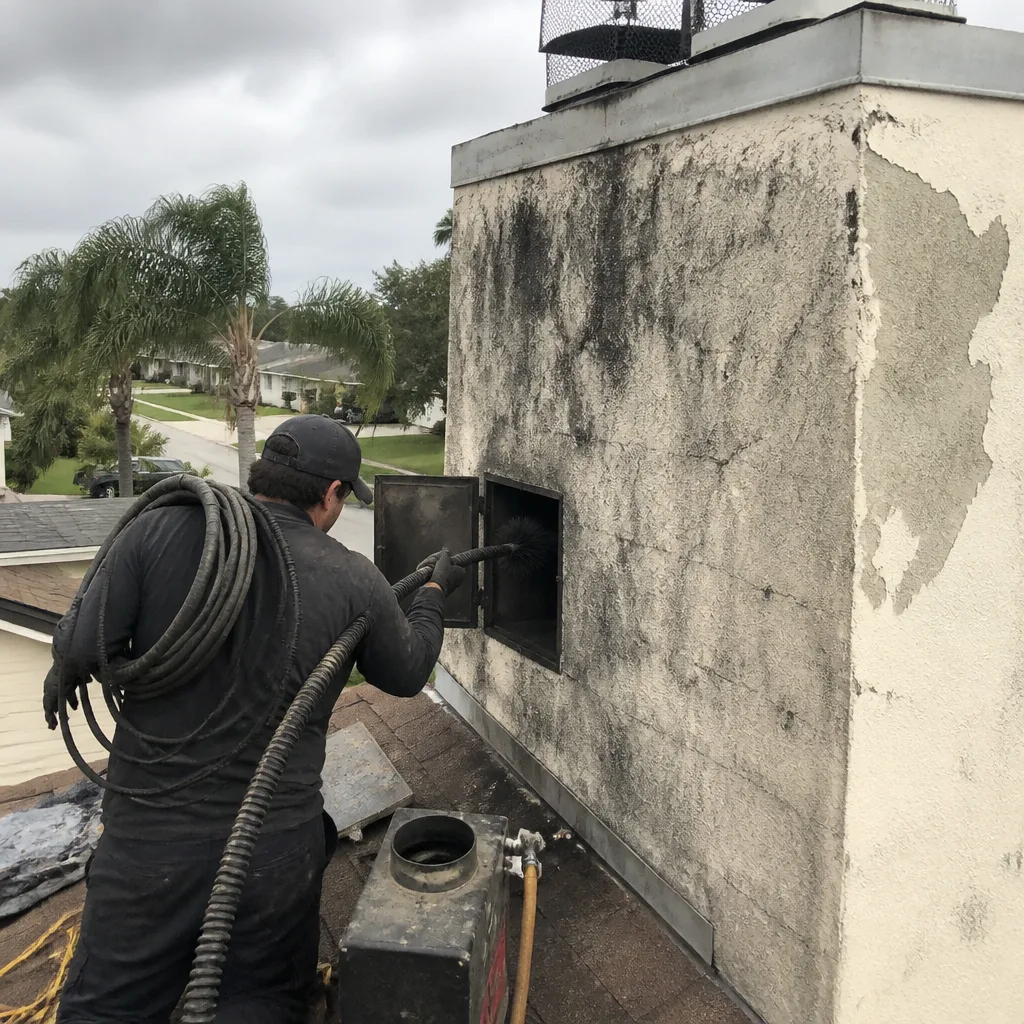 Before
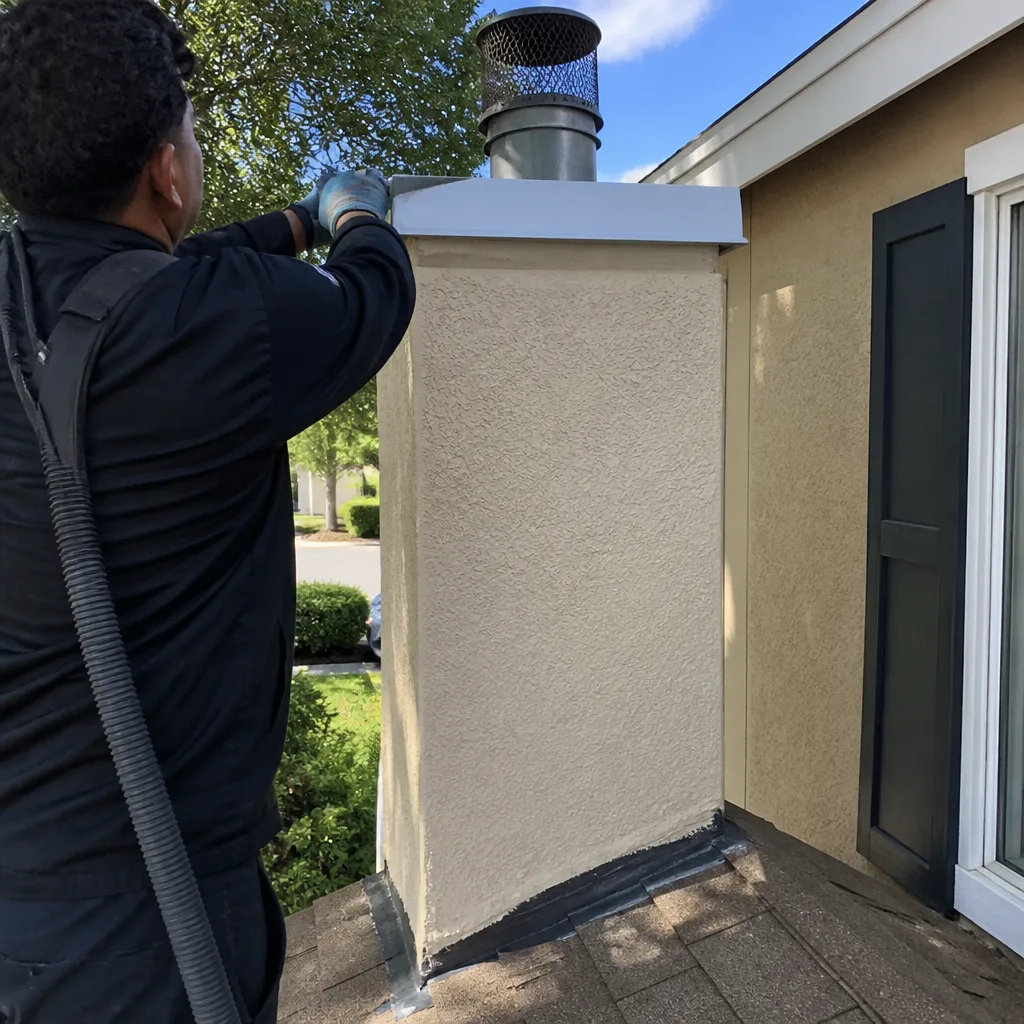 After
After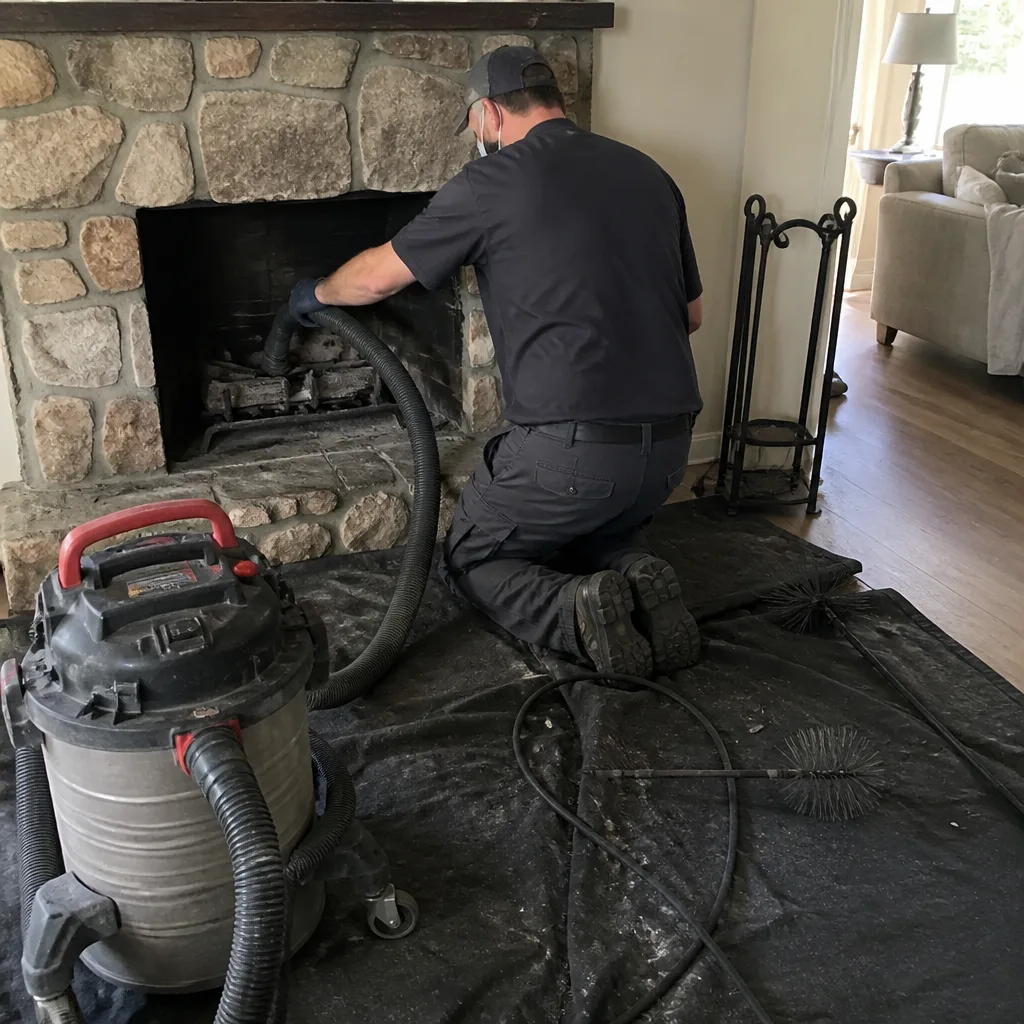 Before
 After
After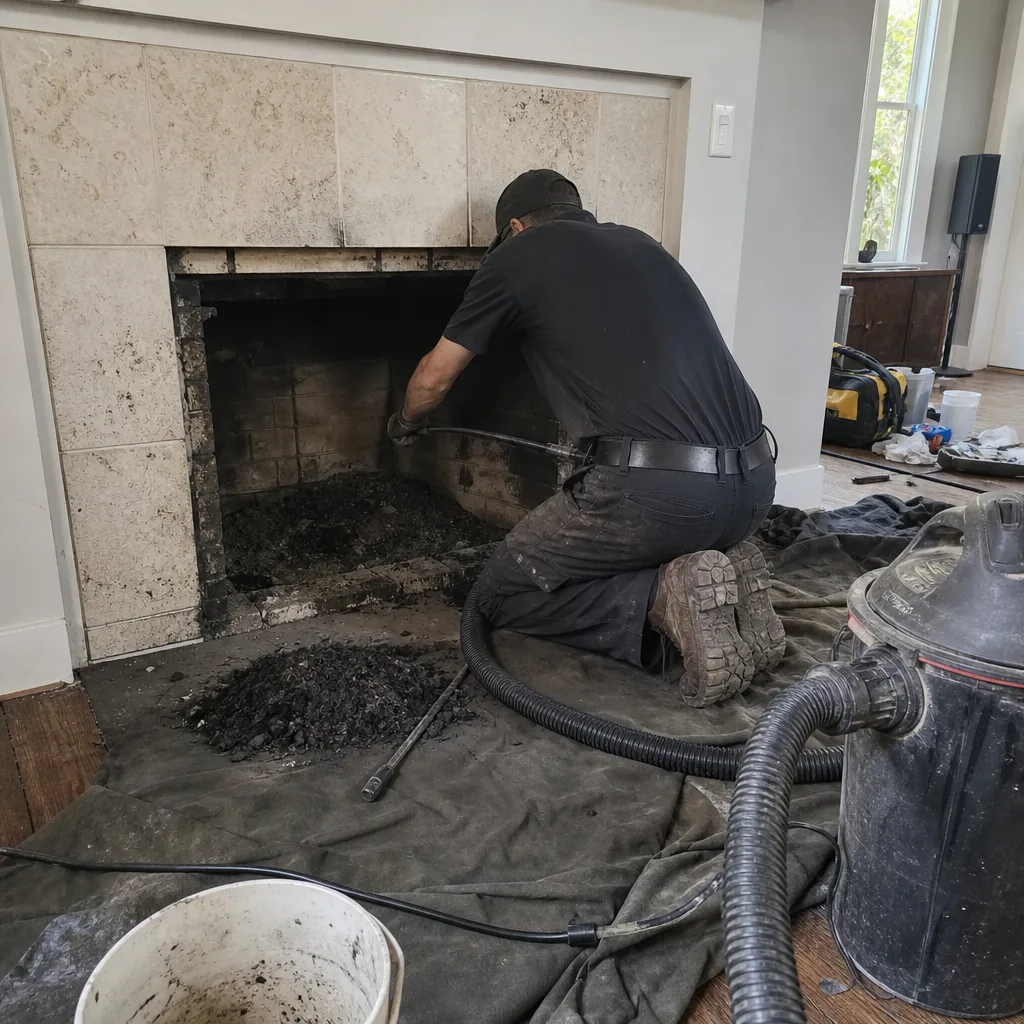 Before
 After
AfterReplacement Cost & What’s Included
In Orlando, a Copperfield chimney cap installation with us generally runs from $285 to $390 for a straightforward swap on a single-flue masonry chimney, and $390 to $540 for a chase-mounted cap on a prefabricated fireplace or a chimney that needs a new mounting base installed. The parts themselves make up a smaller share of the total: a standard Copperfield round cap typically falls between $80 and $160 at retail, while larger custom-fit or multi-flue caps cost more over the counter. What drives the difference is roof access, flue configuration, and whether the old mounting point is still sound.
Every quote we hand over is a written price before any work starts, and the quote includes the cap, the stainless hardware, the sealant, and the labor to remove the old cap and seat the new one. There is no add-on for coming out to the home, no pressure to bundle a sweep or an inspection, and if the flue seat or chase top needs additional work, we’ll show you a photo and stop before any extra charge is added. Our installation is covered under the 365-Day Done Right Promise, which means if the cap isn’t seated right or rains still gets in after the install, we make it right.
We’ll also bring a camera to show you what the flue looks like below the cap, because the cap is often only the top half of the story. If there’s water-damaged flue tile right below the cap, we’ll tell you, and we’ll tell you plainly whether it needs immediate attention or can wait.
DIY or Call Us?
Changing a Copperfield cap usually means working on a roof or on a second-story chase top, often while leaning over a flue opening. We don’t recommend it for anyone who isn’t already comfortable on a ladder. If your roof is steep, if there’s any moss on the shingles, or if you’re working around a two-story home in Baldwin Park or Thornton Park, the risk of a fall is not worth the money saved on labor. Even simple single-story jobs go wrong when the worker lifts a cap into a gust of wind or reaches too far over the flue opening.
What you can safely do from the ground is check whether the cap looks tilted or missing, and listen for rain sounds inside the firebox. You can also take a photo from the yard and text it to us. What we’d rather you not do is climb up with a replacement cap of unknown size, because a cap that fits loosely is worse than a missing cap: it rattles in the wind, wears the flue tile edge, and still lets water in around the legs. If you’re not certain, call us at (850) 940-3442 and we’ll measure it properly. The measurement and the quote cost nothing.
FAQs
A properly installed Copperfield stainless steel cap should last 15 to 20 years in Central Florida, though the mounting hardware and sealant often need attention at the 8 to 10 year mark because of our wet-season cycles and summer UV exposure. If you’re within a few miles of the coast, expect to replace the mounting hardware sooner. Give us a call at (850) 940-3442 and we’ll inspect what you have from the roof before you buy anything.
Dented mesh and loose legs can sometimes be re-secured, but if the cap base or the mounting hardware is rusted through, or the cap no longer seats snugly on the flue, repair usually costs more than a clean replacement. We’ll show you the comparison before you decide. Call (850) 940-3442 for an honest recommendation with photos.
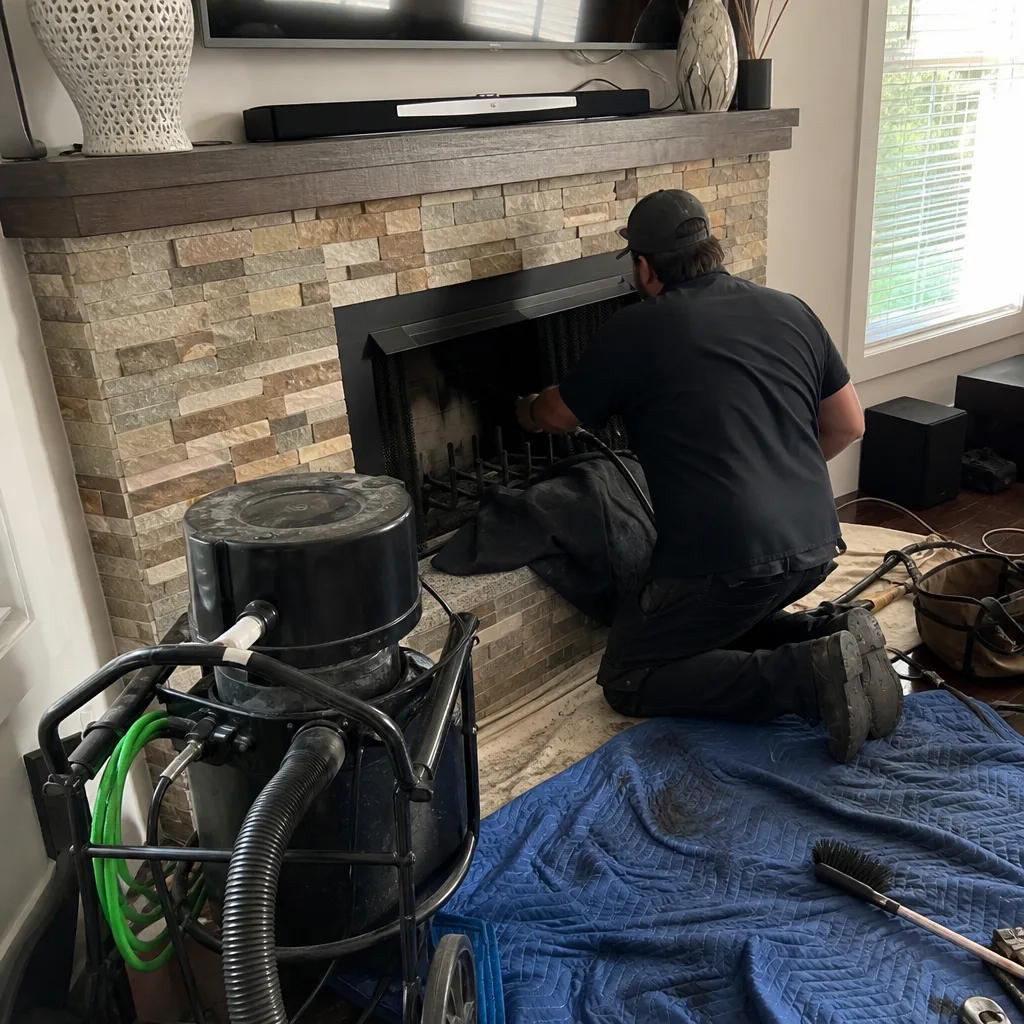
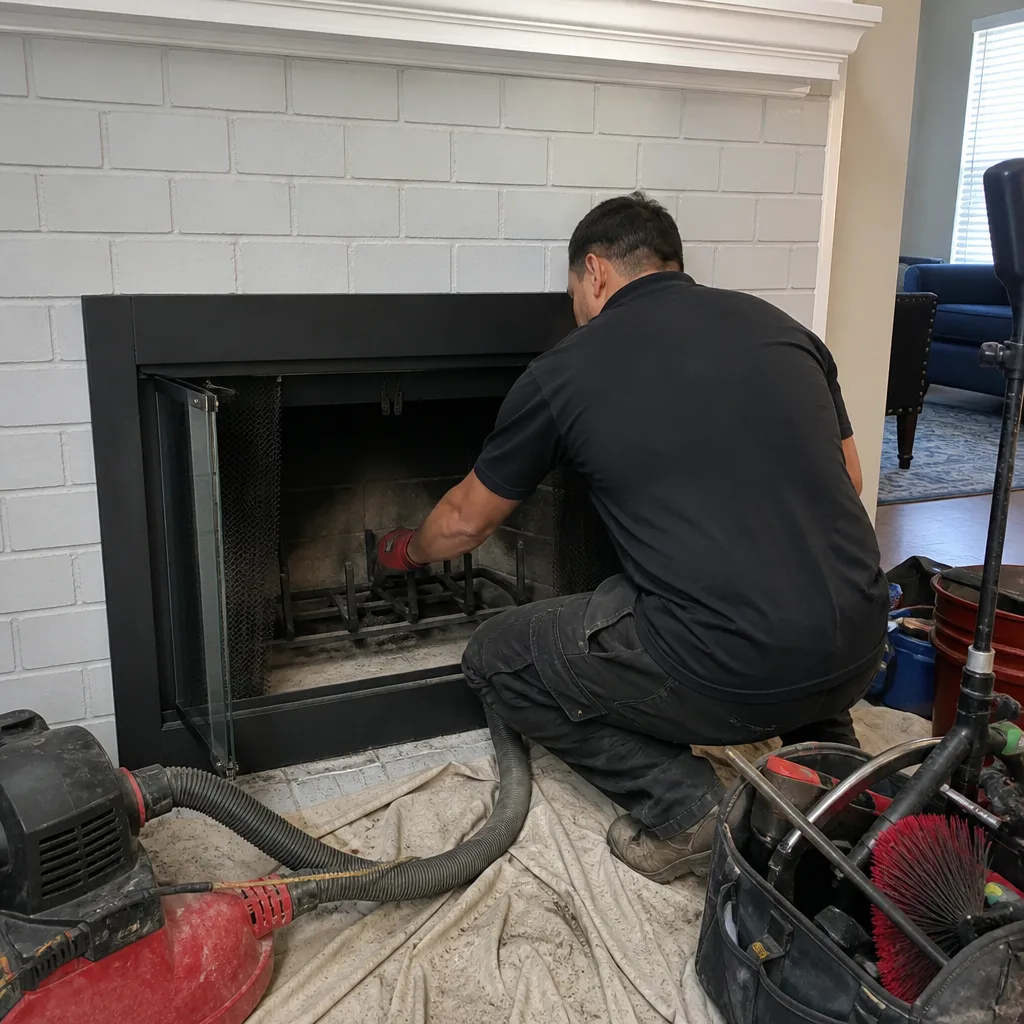
Most Copperfield cap replacements on a single-flue chimney take 45 to 90 minutes from setup to clean-up. Chase-mounted caps on prefab fireplaces run closer to two hours when the old sealant has to be cut away and the chase top inspected. We’ll put drop cloths down inside and take a photo of the clean-up before we leave, every time.
We carry Copperfield caps in the most common Orlando flue sizes on the truck, along with the stainless hardware and sealant needed for the install. For unusual or multi-flue setups, we order the correct cap and schedule the install once it arrives. Call (850) 940-3442 with your flue measurement or a photo from the ground and we’ll tell you which path your chimney falls into.
If you suspect your Copperfield cap needs replacing, start with a phone call at (850) 940-3442 or a photo texted to the same number. We’ll answer, listen to what you’re seeing, and tell you honestly if a visit is even needed. If it is, we’ll bring the cap, a written price, and the tools to do the job without leaving a mark on your home.
Know what’s in your flue before the first fire of the season, everything else follows from that.
Written by Danny Cortes, Owner, Kindling Chimney Orlando at Kindling Chimney Orlando, serving Orlando and nearby areas.