
 Masonry repair
 Sweep & inspection
 Caps & crowns
 Flue relining
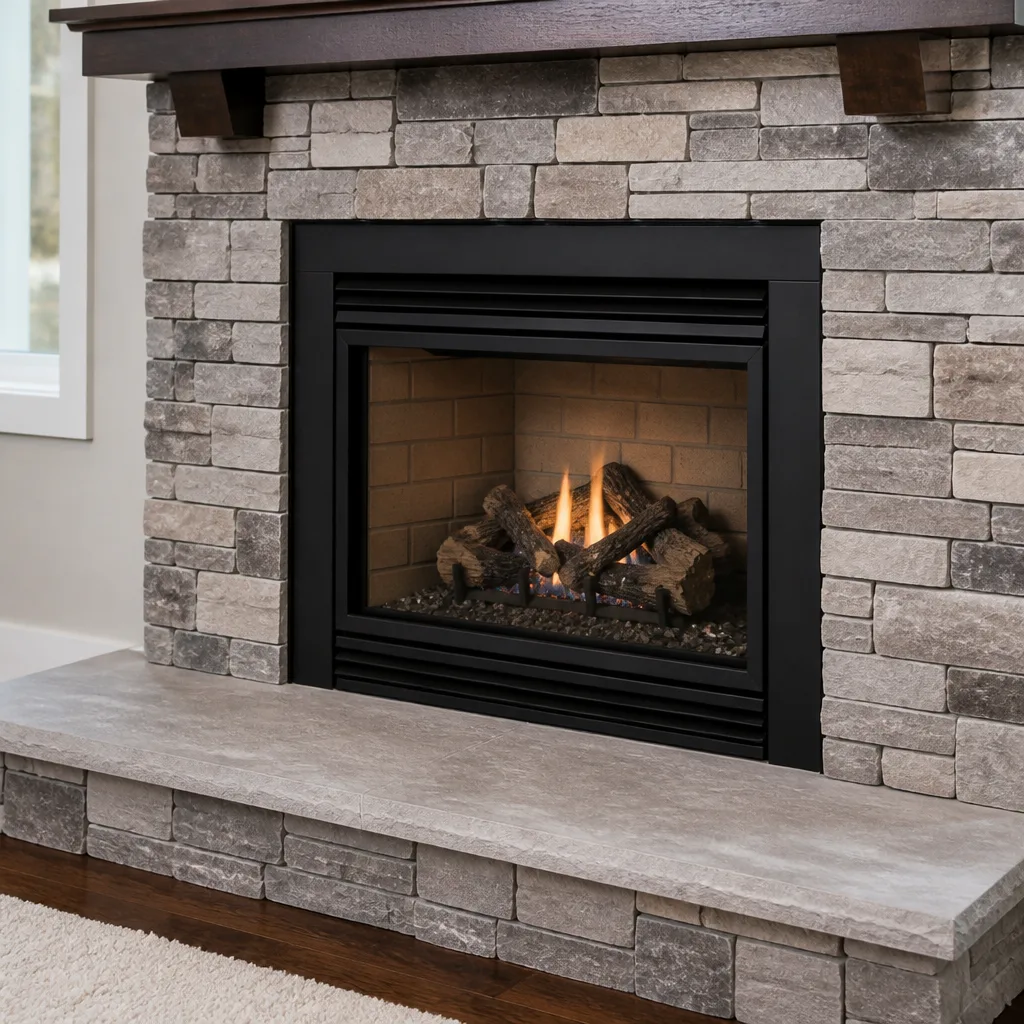 Gas fireplace service
Level 1 sweep and inspection to the NFPA 211 annual standard - flue, crown, cap, and flashing checked and photographed
Chimney sweep logs do not sweep chimneys. They loosen some creosote - which then falls where a brush and vacuum still have to collect it.
Copperfield Crown Repair: The Orlando Owner’s Guide
A Copperfield chimney crown repair in Orlando typically runs between $450 and $1,100 installed, depending on whether we’re sealing hairline cracks or rebuilding the crown entirely. We keep Copperfield-compatible crown materials on our trucks, so most jobs are finished in a single visit. You usually find out the crown has failed the same way most Orlando homeowners do: water stains on the ceiling near the fireplace, damp mortar inside the firebox after a summer storm, or crumbling concrete you can see from the driveway.
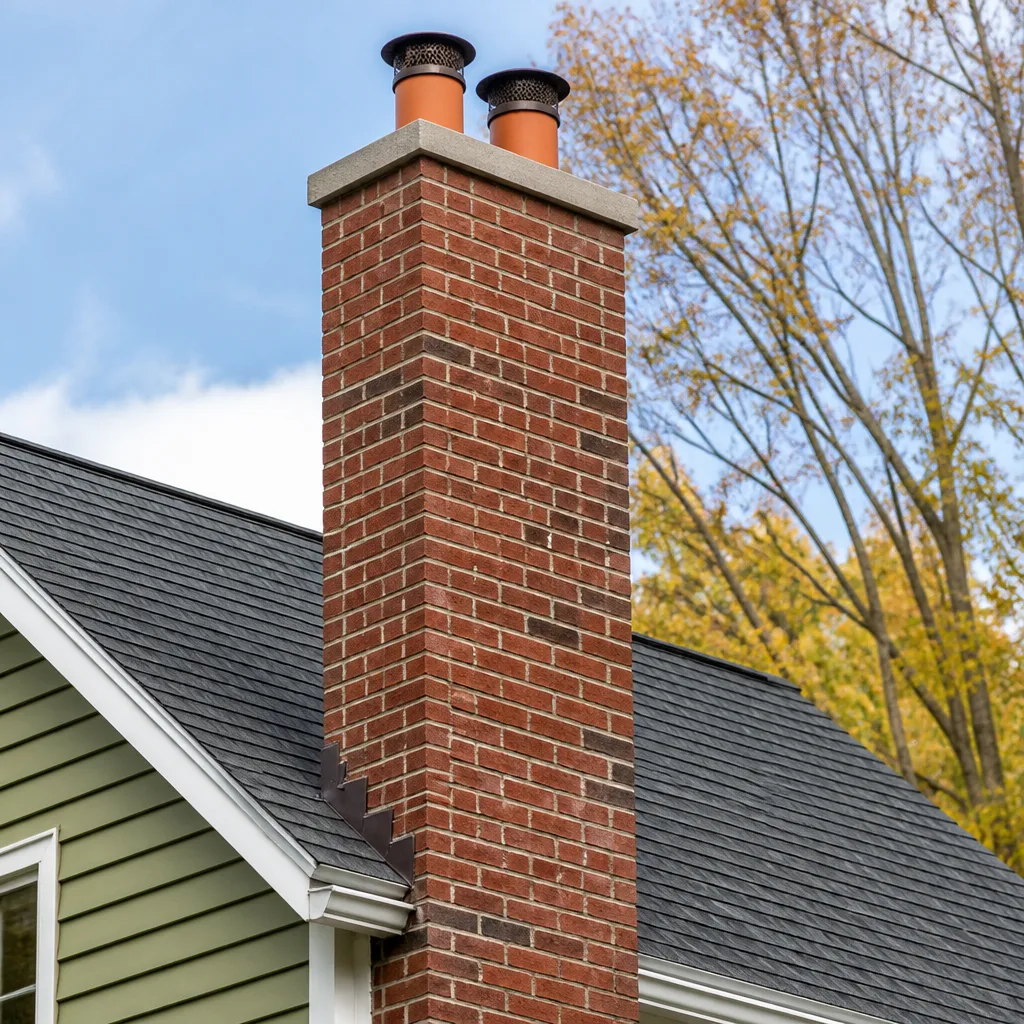
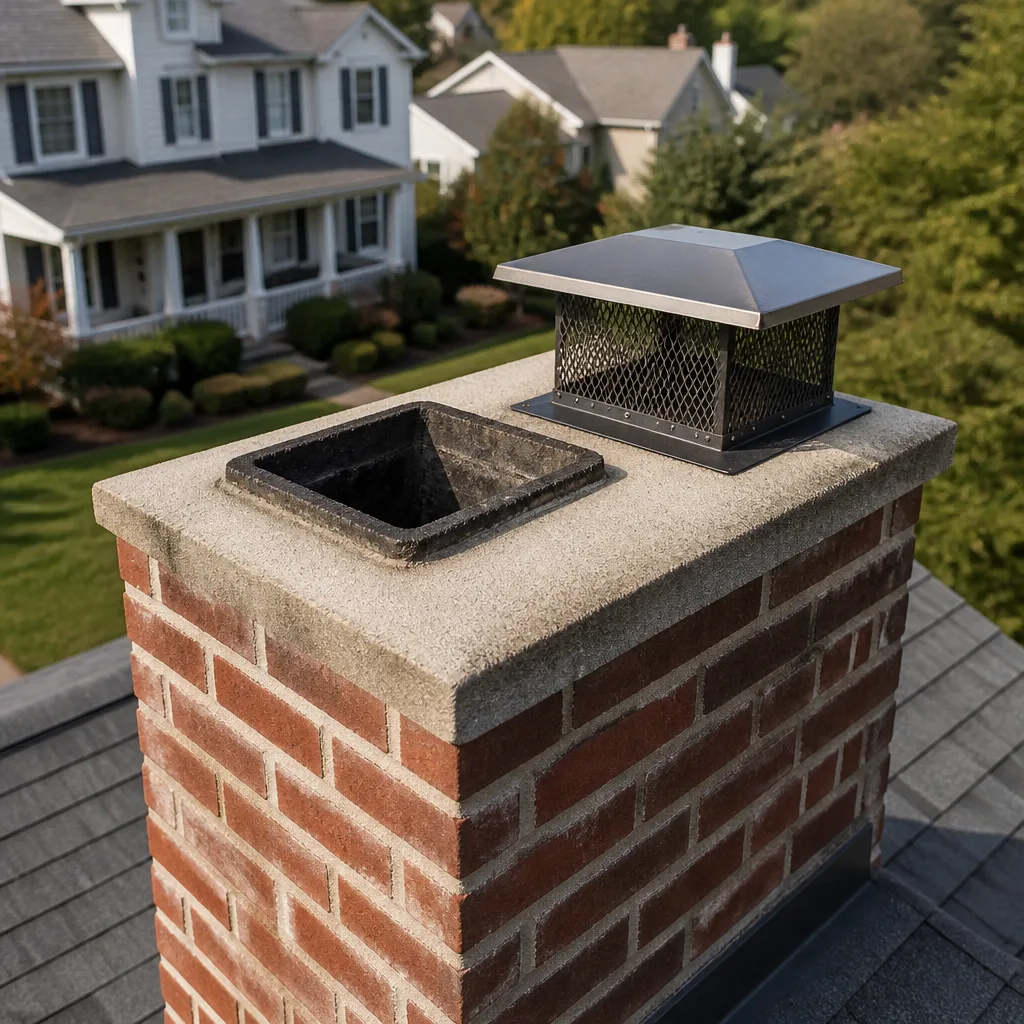
The crown is the concrete slab that sits on top of your chimney, sealing the gap between the flue liner and the brick. When it cracks, water gets in. In Orlando’s humidity and afternoon downpours, that water doesn’t dry out quickly. It sits, soaks into the masonry, and starts breaking things from the inside. Danny Cortes has pulled apart enough Orlando crowns to know that what looks like a small surface crack is often hiding a sponge of moisture underneath.
Which Copperfield Models This Applies To
Copperfield’s crown design varies by chimney type, and you need to know which one you have before anyone mixes concrete. Their prefabricated fireplace chimney systems use a metal chase top, not a poured concrete crown. If you have a Copperfield zero-clearance fireplace with a factory-built metal chimney, the “crown” is actually a galvanized or stainless chase cover, and that’s a different repair entirely. The concrete crown repair we’re describing here applies to Copperfield masonry fireplace installations and Copperfield stoves vented through a masonry chimney.
For Copperfield masonry systems, the crown dimensions depend on the flue tile size and whether the chimney has a single flue or multiple. Copperfield’s standard masonry crowns in Florida homes are cast 2 to 3 inches thick with a 2-inch overhang and a drip edge, though we regularly see older Orlando homes where the original crown was poured flush, with no overhang at all. That flush design channels runoff straight down the brick, and it’s the single most common compatibility issue we run into. If your crown has no drip edge, we’ll recommend building that into the repair even if you’re trying to stay close to the original spec, because Copperfield’s newer installation guides call for the overhang specifically to keep water off the masonry.
We stock OEM-spec Copperfield crown material and quality aftermarket equivalents with the same compressive strength and weather resistance for Florida conditions. The decision usually comes down to matching what’s already there and what the chimney inspector flagged. Either way, the material we use is mixed on site, not poured from a bag and hoped for.
Styles & brands we work with
Signs Your Copperfield Crown Repair Is Failing
- Water stains on the ceiling or wall near the chimney. These are almost always from water that entered above the roofline. The crown is the first place we look, because it’s the topmost seal and the one exposed to the most direct Orlando rain.
- White mineral deposits on the exterior brick. That’s efflorescence, and it means water is moving through the masonry and pulling salts out with it. A cracked crown lets that water in, then the Florida sun bakes it out through the brick face, leaving the chalky residue.
- Pieces of concrete in the gutter or on the roof. Spalling happens when trapped moisture expands with temperature swings. Orlando’s freeze-thaw cycle is mild, but our summer heat plus a saturated crown is enough to pop chunks loose over a few seasons.
- A musty smell from the fireplace after rain. That’s moisture sitting in the flue, behind the damper, or in the smoke chamber. A failing crown lets water track down the flue tile and pool where it can’t evaporate quickly.
- Rust stains running down the chimney exterior. If you have a Copperfield stove or fireplace with a cast iron damper or rain cap, cracks in the crown let water reach that metal. The rust streaks are water marks carrying oxidized metal down the brick.
See the difference
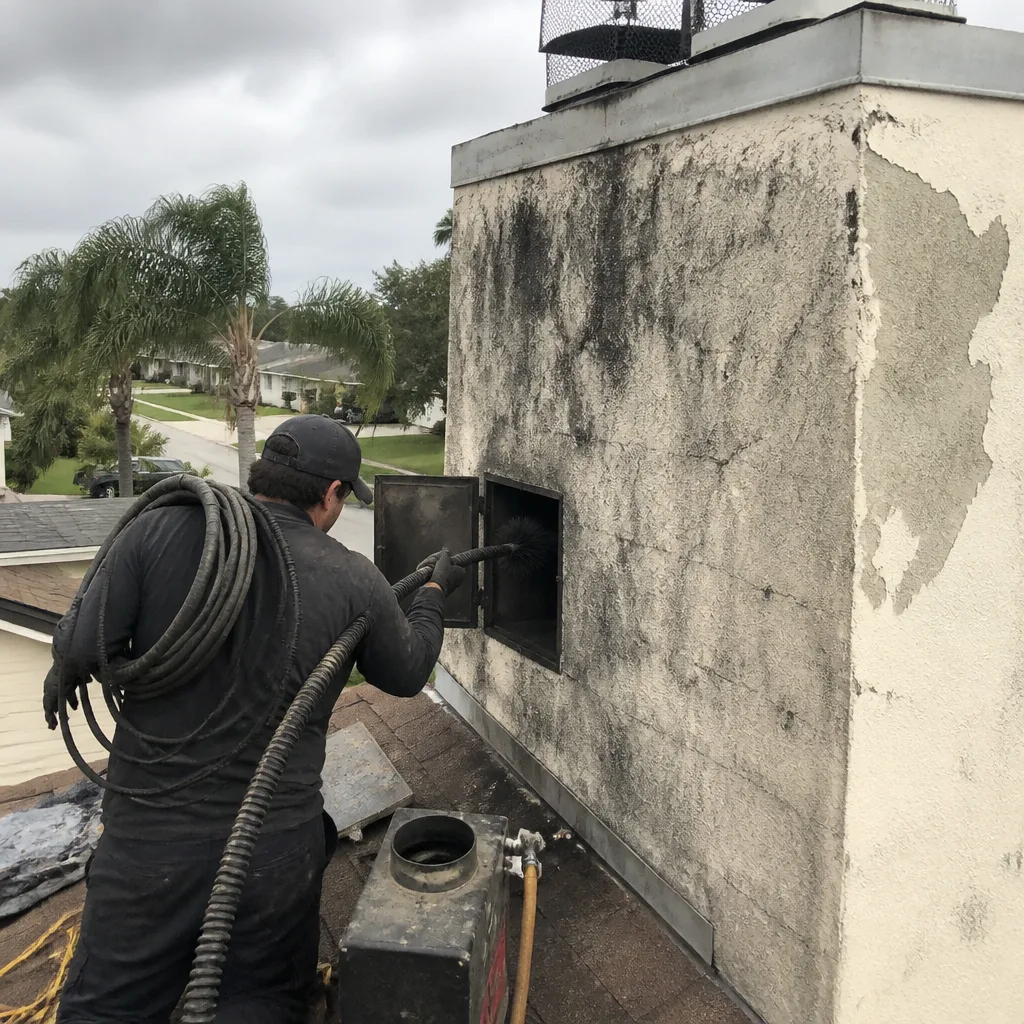 Before
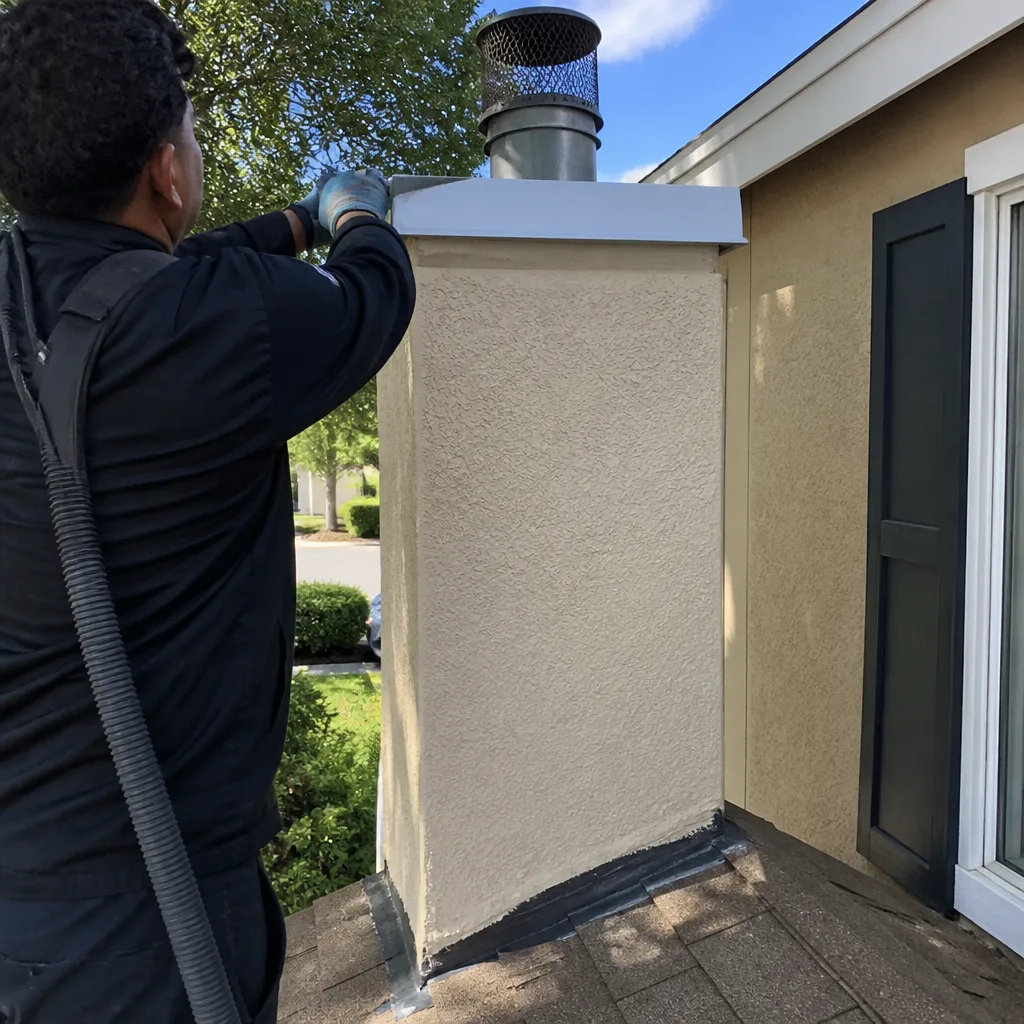 After
After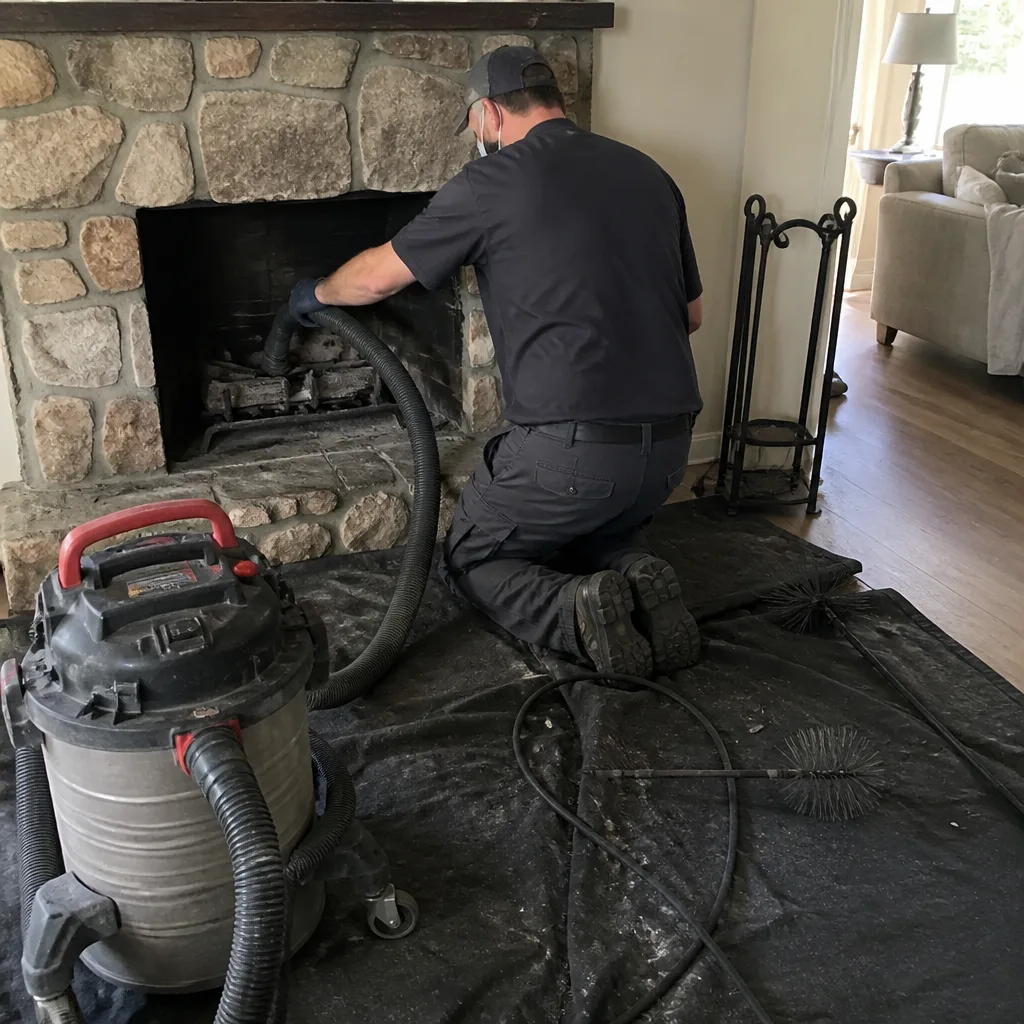 Before
 After
After Before
 After
AfterReplacement Cost & What’s Included
In Orlando, a crack-seal and resurfacing of a Copperfield chimney crown runs between $450 and $700. Most homeowners in the metro area fall into this range. A full tear-out and recast, where we remove the old crown, inspect the flue tile tops, and pour new concrete with proper overhang and drip edge, runs $800 to $1,100. We’ll always give you the written price before we mix anything, and the number you see is the number you pay.
The main cost drivers are chimney height, roof access, the condition of the top course of brick, and whether we’re doing one flue or two. A second-story chase in Dr. Phillips with a steep pitch costs more than a single-story ranch in Conway. We also include our clean-up in that price: drop cloths on the roof and below, no debris left in the yard, and a photo of the finished crown from above before we leave. Every Copperfield crown repair is backed by our 365-Day Done Right Promise. If the crown cracks again within a year, we make it right.
DIY or Call Us?
You can safely check the crown yourself from a ladder, if you’re comfortable working one and the roof pitch is walkable. Look for visible cracks, missing concrete, or a flush edge with no overhang. If your Copperfield chase top is metal, check for rust or lifted seams around the screws. None of that requires tools, and it’s worth knowing before you call us so you can describe what you’re seeing.
The repair itself is roof work on a chimney top, and that carries a real fall risk. The concrete also has to be mixed to the right consistency, bonded correctly to the existing crown, and finished with a drip edge that actually sheds water. Most DIY crown patches in Orlando fail within two seasons because the concrete is mixed too dry or the old surface isn’t prepped. That’s not a weekend project, and we’d rather you not take the risk. Call (850) 940-3442 and we’ll come look at it.
FAQs
A properly poured Copperfield crown with a drip edge lasts 15 to 25 years in Central Florida, with the main threats being UV exposure and standing water from our summer rain pattern. Crowns without an overhang often fail in 10 years or less because runoff pours straight down the brick. The fix is a proper recast, not a patch.
Yes, if the crack is hairline and the concrete hasn’t spalled or pulled away from the flue tile, we can seal and resurface rather than recast. We’ll only recommend that when the underlying crown is structurally sound, and we’ll show you the condition before we decide. If water has already compromised the top course of brick, replacement is the honest answer. Call (850) 940-3442 and we’ll tell you which applies.
A seal and resurface takes one visit, usually two to three hours including set time. A full tear-out and recast takes a single visit of four to six hours, and you can use the fireplace again once the concrete has cured. We’ll give you the exact timing when we see the chimney.
We keep Copperfield-compatible crown material and repair compounds on our trucks, along with parts for DuraFlex, HeatShield, and Gelco chimney systems. For most Copperfield masonry crowns we don’t need to order anything, which means we can often complete the repair the first time we’re out.
If your Copperfield crown is showing cracks or you’ve got water stains you can’t explain, call Kindling Chimney Orlando at (850) 940-3442. We’ll send a technician out, show you exactly what’s happening on top of your chimney, and give you a written price before any work starts. Know what’s in your flue before the first fire of the season – everything else follows from that.
Written by Danny Cortes, Owner, Kindling Chimney Orlando at Kindling Chimney Orlando, serving Orlando and nearby areas.