
Last updated October 15, 2026
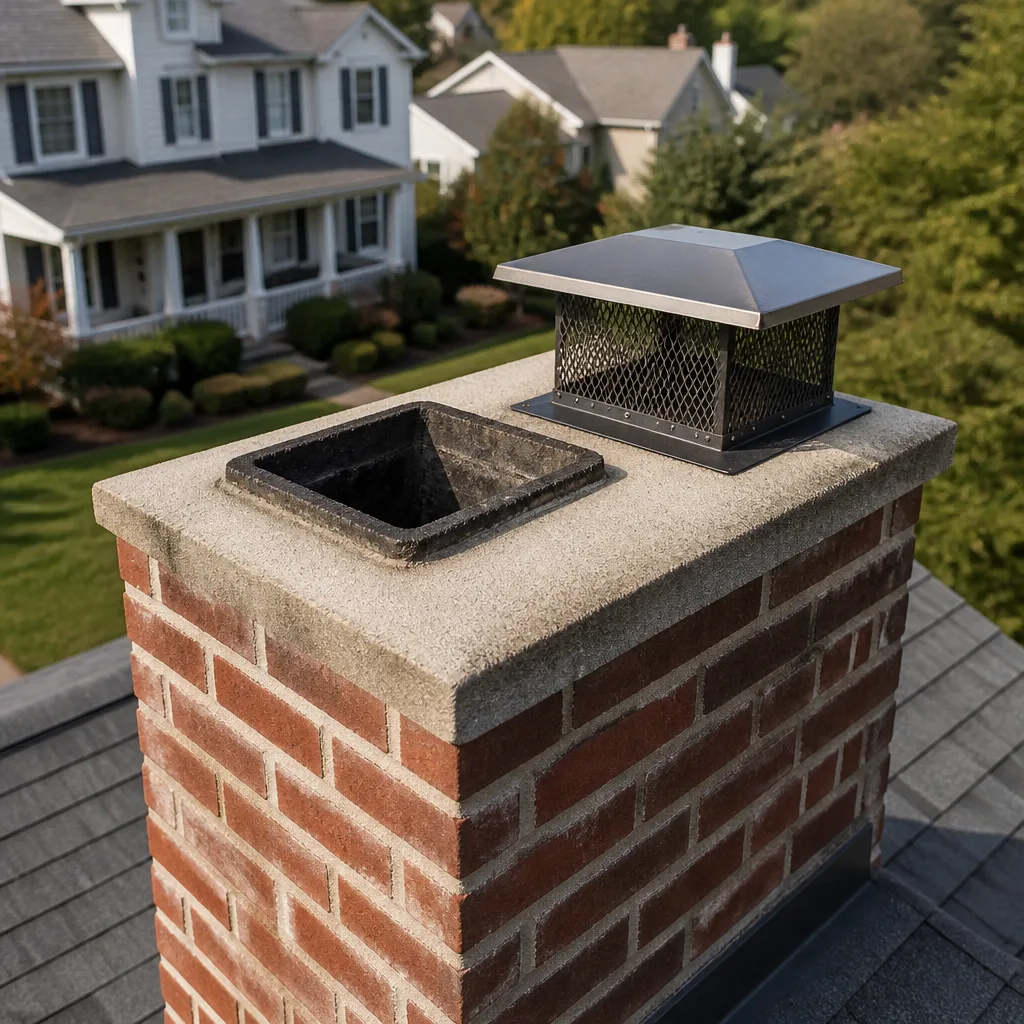 Sweep & inspection
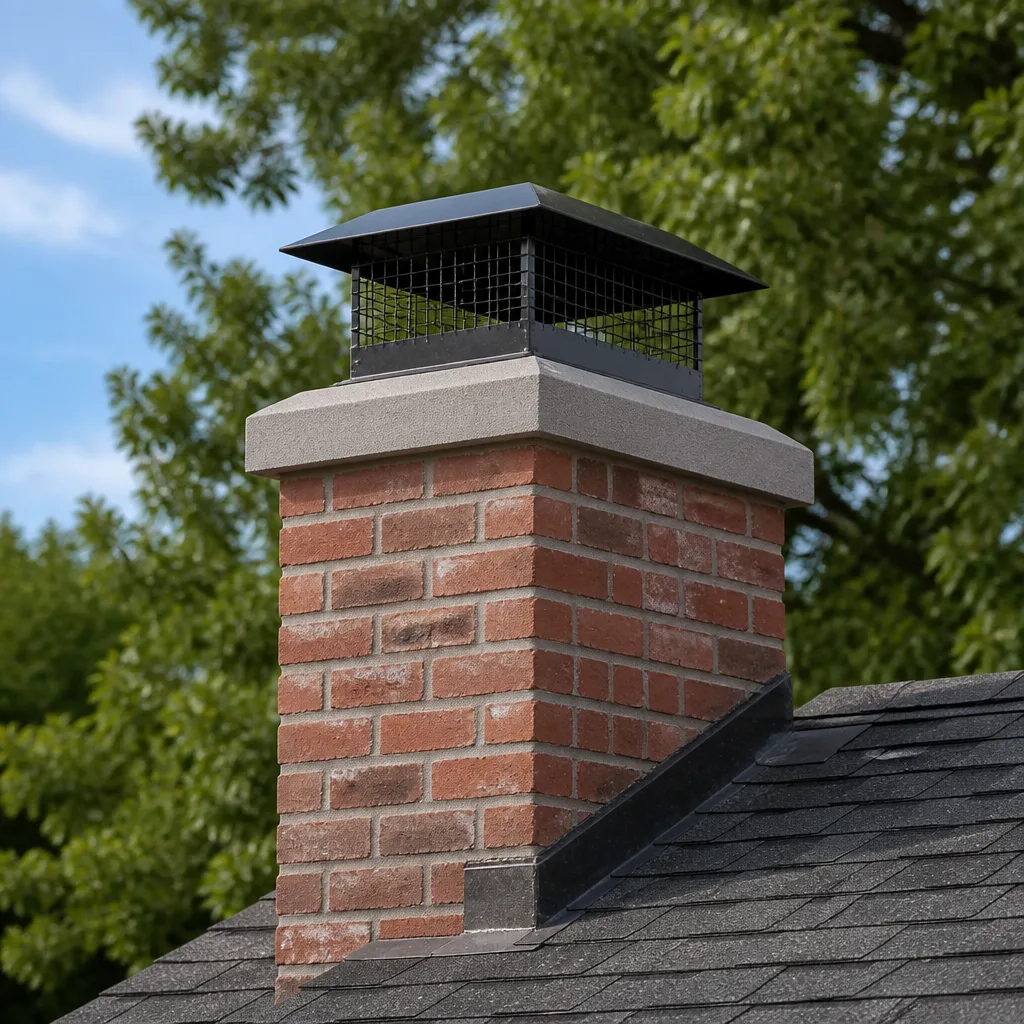 Caps & crowns
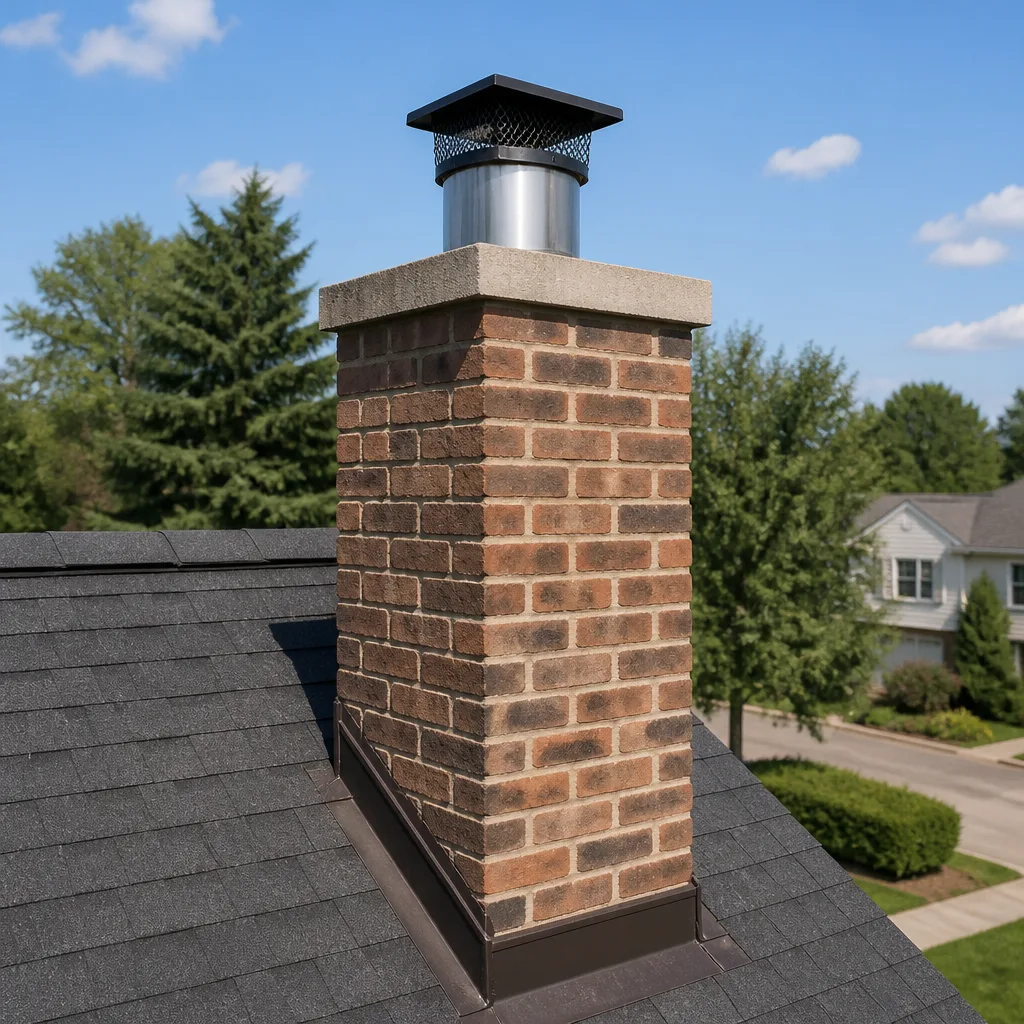 Flue relining
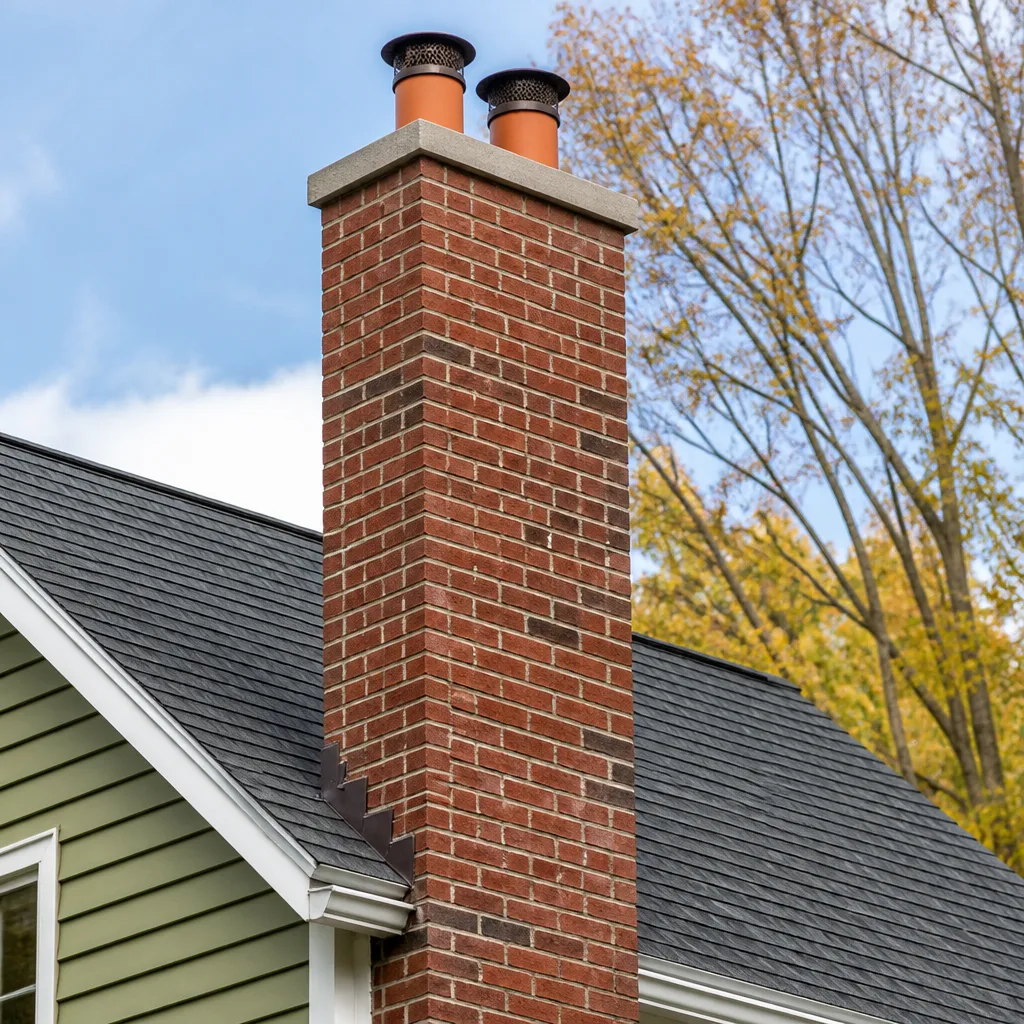 Masonry repair
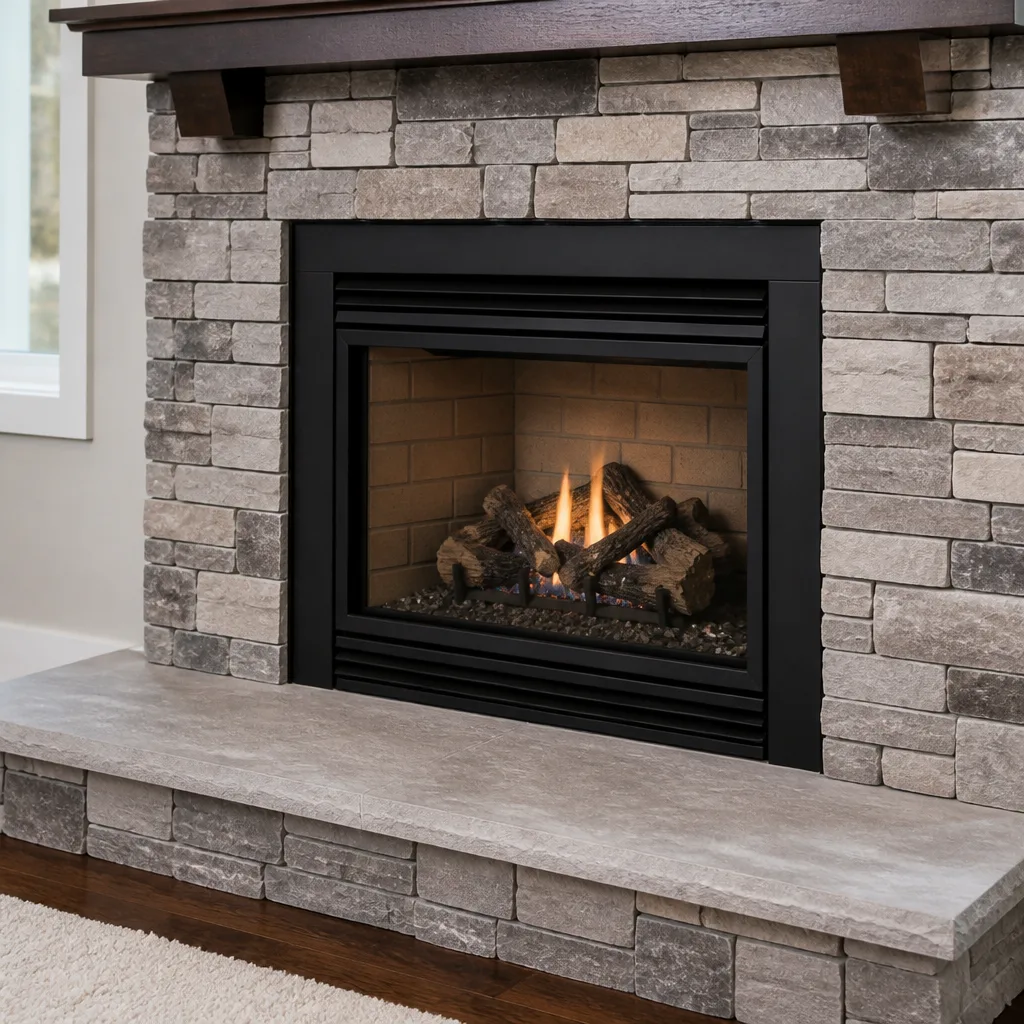 Gas fireplace service
Level 1 sweep and inspection to the NFPA 211 annual standard - flue, crown, cap, and flashing checked and photographed
Chimney sweep logs do not sweep chimneys. They loosen some creosote - which then falls where a brush and vacuum still have to collect it.
DIY vs Professional Chimney Cleaning: The Orlando Homeowner’s Decision Guide
The Home Depot chimney cleaning kit costs about $40. It includes a wire brush, a few fiberglass rods, and the implicit promise that you can handle this yourself. For some Orlando homeowners, that’s true. But here’s the counterintuitive part: the dangerous chimney problems in Central Florida homes are almost never visible to the person holding that brush. A cracked flue liner in a Winter Park home, a corroded damper in College Park, or stage-3 glazed creosote hiding behind a layer of fluffy stage-1 soot in Dr. Phillips: none of these show up through a $40 kit or an afternoon of elbow grease. This guide will show you exactly which three chimney maintenance tasks are safely DIY for an Orlando homeowner, which four situations require a trained eye, and how to decide in five minutes which category you’re in. For more guides & resources, visit our blog.
Quick Answer
DIY chimney cleaning in Orlando is reasonable for surface-level maintenance: checking the exterior cap, testing the damper, clearing loose firebox debris, and doing a basic paper smoke test. It is not reasonable for evaluating flue liner condition, creosote staging, animal blockages, or any inspection requiring a camera or roof access on a two-story home. For most Orlando families who use their fireplace regularly, a professional sweep costs $200 to $250 and includes a written report and warranty documentation that a DIY kit simply cannot provide. See our Chimney Cleaning Cost Breakdown: The Orlando Homeowner’s Reference for 2026 for full pricing details.
Styles & brands we work with
Table of Contents
- DIY-Safe Task #1: The Exterior Cap Visual Check
- DIY-Safe Task #2: The Damper Open/Close Test
- DIY-Safe Task #3: Firebox Debris Removal and the Paper Smoke Test
- What DIY Cannot See: Liner Condition, Creosote Staging, and Animal Blockages
- The Liability Gap: DIY Work, Insurance Claims, and Home Sales
- The Real Cost Comparison: $40 DIY Kit vs. $200 – $250 Professional Sweep
- The 3-Question Decision Framework for Orlando Homeowners
- Che cos’è un camino? Orlando-Specific Considerations: Climate, Critters, and Two-Story Roofs
Common Mistakes to Avoid
- Brushing without inspecting. Running a wire brush up the flue without first checking liner condition with a camera can turn a small crack into a full liner failure. You cannot fix what you cannot see, and in Orlando’s humidity, small cracks grow quickly.
- Assuming a new home has a clean chimney. New construction in Lake Nona and Horizon West often has construction debris, drywall dust, or even missing caps. Age of the house tells you nothing about what is inside the flue.
- Using chemical creosote logs as a substitute for sweeping. Creosote-burning logs can loosen stage-1 creosote but do nothing for stage-3 glaze. They also give a false sense of safety without any documentation for insurance purposes.
- Ignoring the chimney cap. A missing or damaged cap in Orlando means rain, humidity, and nesting birds. This is the single most common preventable chimney problem we see in the Conway and Belle Isle areas.
- Skipping the smoke test entirely. A five-minute paper smoke test can reveal a damper problem or airflow issue before you light a full fire. Skipping it because “it worked last year” is how small problems become expensive ones.
- Treating all creosote as equal. Stage-1 fluffy soot brushes off easily. Stage-3 glaze requires chemical treatment or rotary removal. Brushing stage-3 with a wire brush polishes the surface and accomplishes nothing.
See the difference
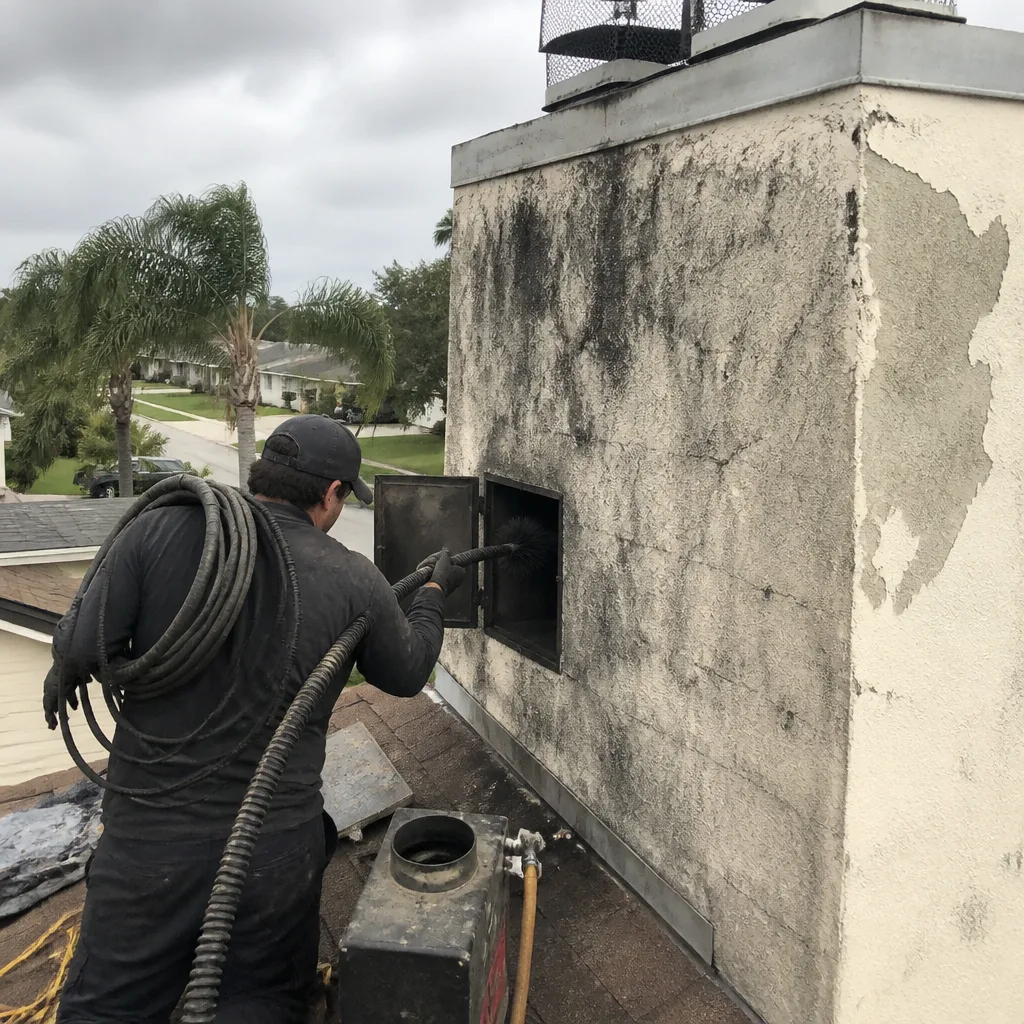 Before
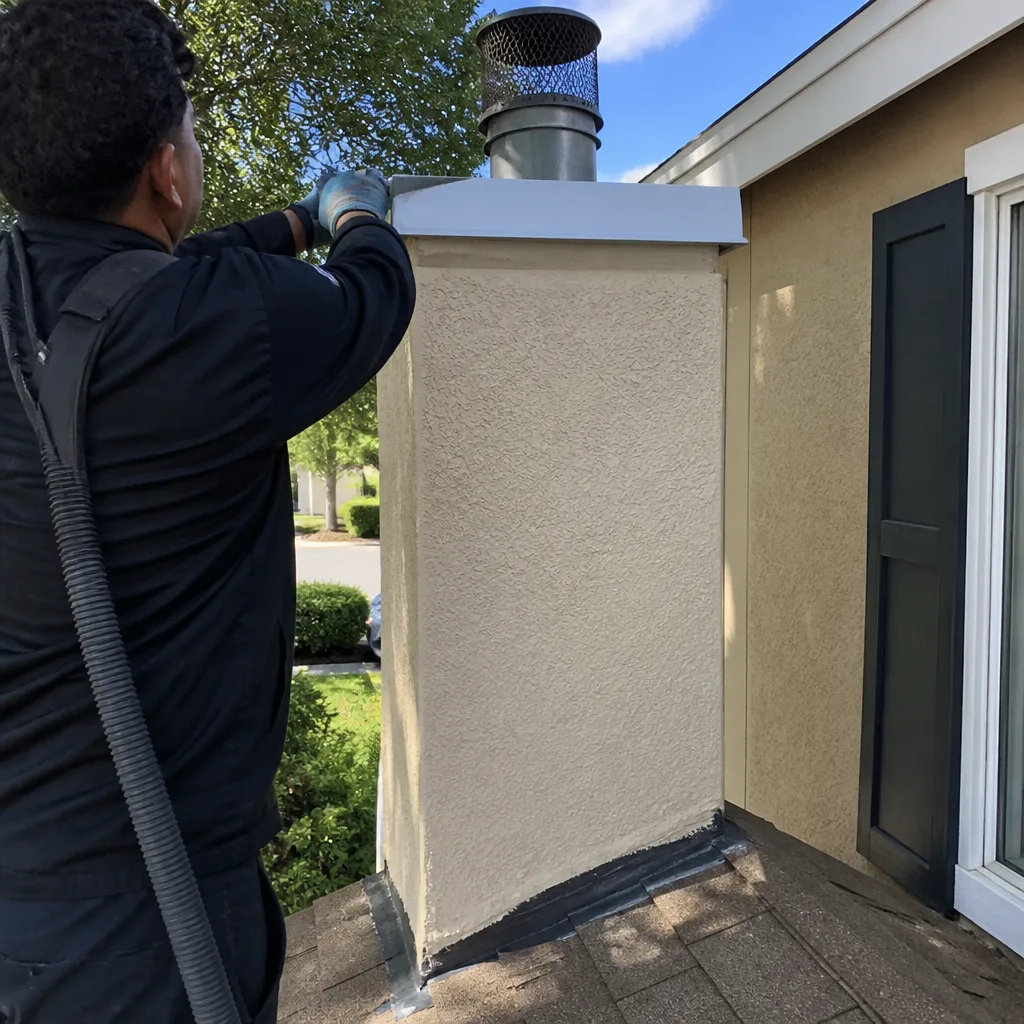 After
After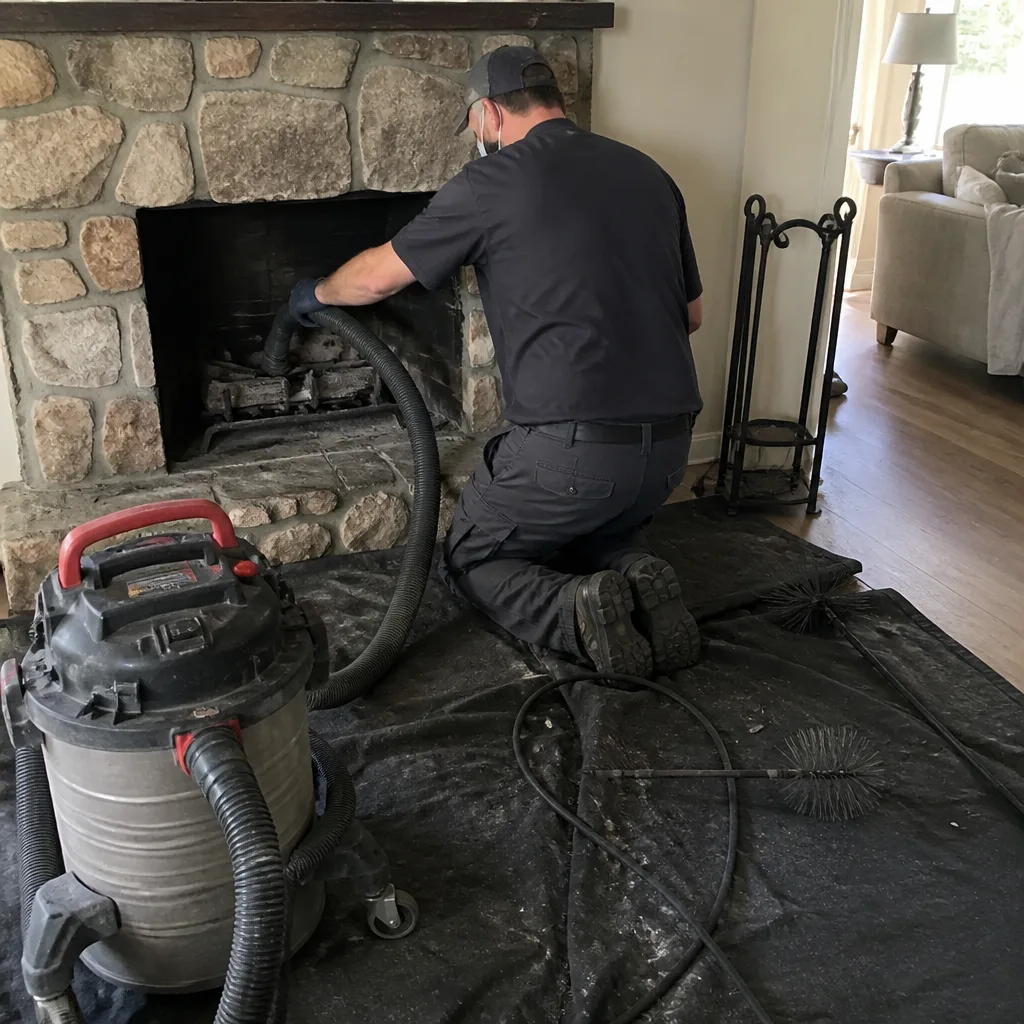 Before
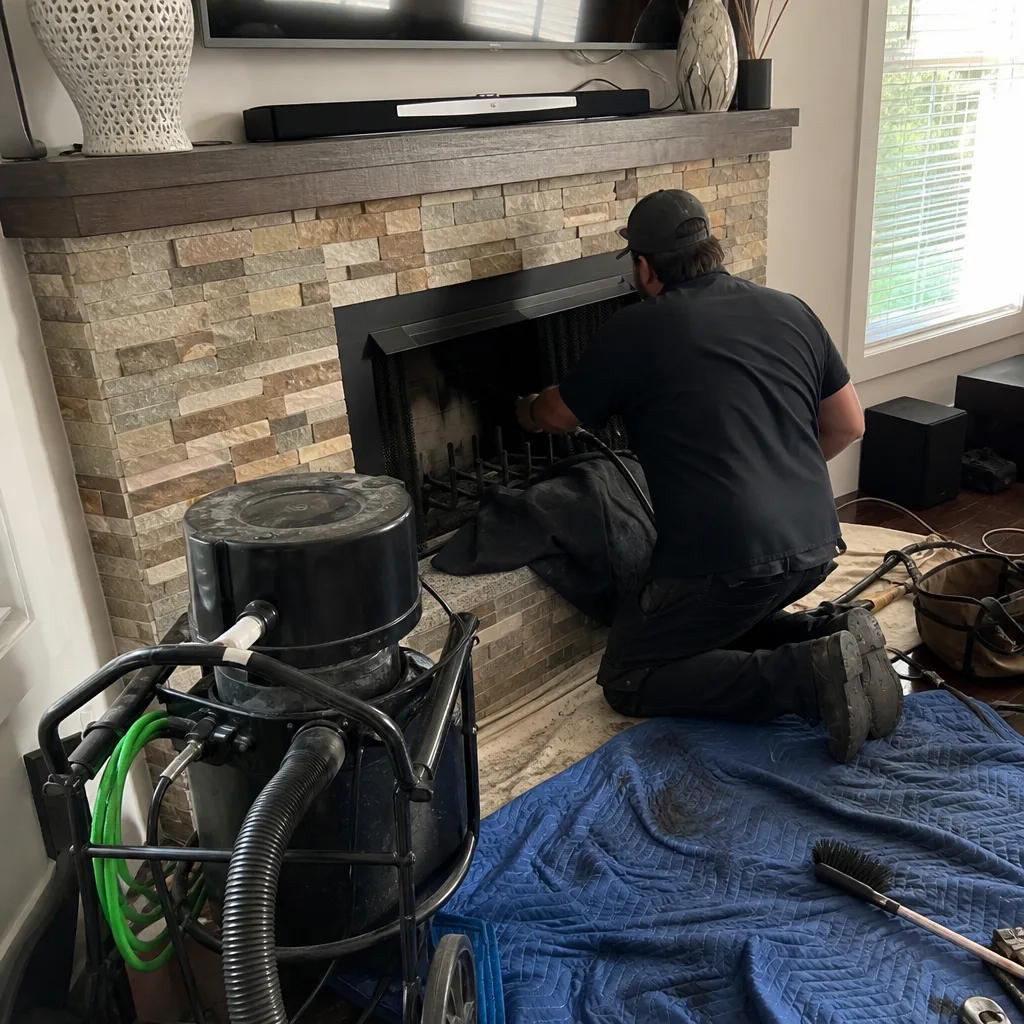 After
After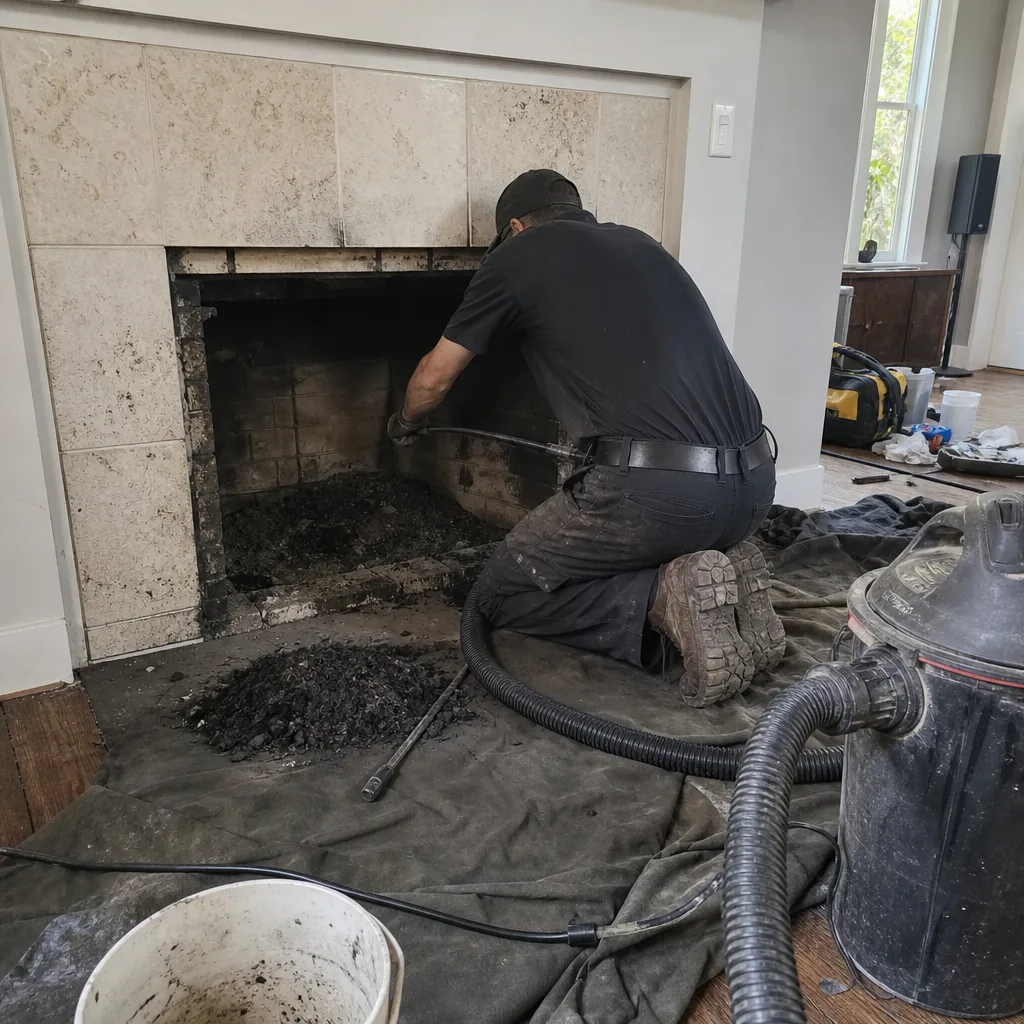 Before
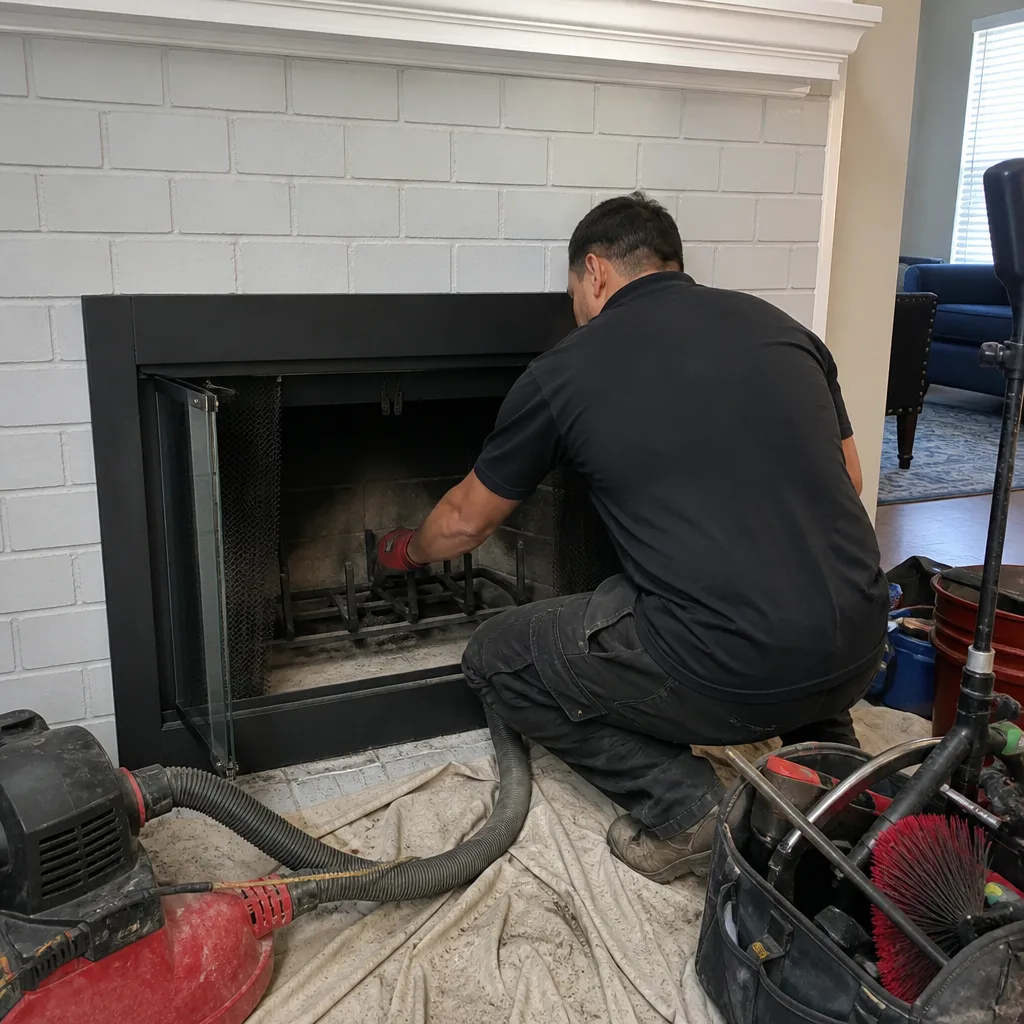 After
AfterWhen to Call a Professional
Call a professional if you have not had a documented chimney inspection in the past year, if you see flaking tile or dark staining inside the firebox, if you hear animals in the chimney, if you smell smoke in rooms far from the fireplace after a fire, or if you are buying or selling a home in Orlando and need a paper trail. For anything involving a two-story roof in Orlando’s summer heat, call a pro: the risk of a fall or a missed problem is not worth the savings. Kindling Chimney Orlando offers free estimates throughout the Orlando area. Call (850) 940-3442 and a live person answers, day or night.
Frequently Asked Questions
A standard chimney sweep in Orlando runs between $200 and $250, and that includes a written report, a visual inspection of accessible components, and a 365-day warranty from Kindling Chimney Orlando. Add-ons like camera inspection or creosote treatment may extend that range, but the sweep itself should stay within that band for a standard single-flue Orlando home.
Yes, but not for the reason most people think. Even occasional fires in Orlando produce creosote, but the bigger risk for low-use fireplaces is animal nesting and humidity-related liner deterioration. Orlando’s subtropical climate means a chimney that sits unused for months becomes a condominium for birds and a moisture trap for masonry. Our Seasonal Chimney Cleaning Care for Orlando: Year-Round Homeowner’s Guide explains how to protect your chimney through every season.
You can remove surface soot and loose debris from the firebox and lower flue walls, and that is legitimate maintenance for a low-use Orlando fireplace. What you cannot do is evaluate the liner, identify creosote staging, or document the condition for insurance purposes. For a full answer, see the DIY-safe sections above.
The National Fire Protection Association recommends a sweep when creosote reaches 1/8 inch thickness, which for most Orlando families translates to once per year if you burn regularly during the winter months. If you burn more than three cords of wood annually or burn unseasoned wood, you may need twice-yearly service.
The most likely outcomes in Orlando are stage-2 or stage-3 creosote buildup that requires chemical or rotary removal, animal nesting that blocks the flue, and acceleration of liner damage from trapped acidic moisture. The cost to remediate these conditions runs significantly higher than a standard sweep, and if you eventually sell your home, the missing documentation becomes a negotiation point.
Yes, but for a different reason than wood-burning fireplaces. Gas fireplaces produce less creosote but more acidic condensation, which attacks liner and masonry. An annual inspection for a gas fireplace in Orlando is more about the exhaust path, the damper seal, and the exterior cap than about sweeping soot.
The Bottom Line
For the Orlando homeowner who uses a fireplace regularly, the honest answer is that surface-level DIY maintenance is fine, but hidden problems require a professional. The three DIY tasks worth doing are the cap check, the damper test, and firebox debris removal. The four situations that demand a professional are liner evaluation, creosote staging, animal blockages, and any inspection requiring camera or roof access. Between a $40 kit with no documentation and a $200 to $250 professional sweep with a written report and 365-day warranty, the professional route wins on value for most families. If you are unsure which category you’re in, read our How to Hire a Chimney Cleaning Contractor in Orlando: A Step-by-Step Guide or call Kindling Chimney Orlando at (850) 940-3442 and a live person will help you decide.
Written by Danny Cortes, Owner at Kindling Chimney Orlando, serving Orlando since 2003.