
Last updated October 15, 2026
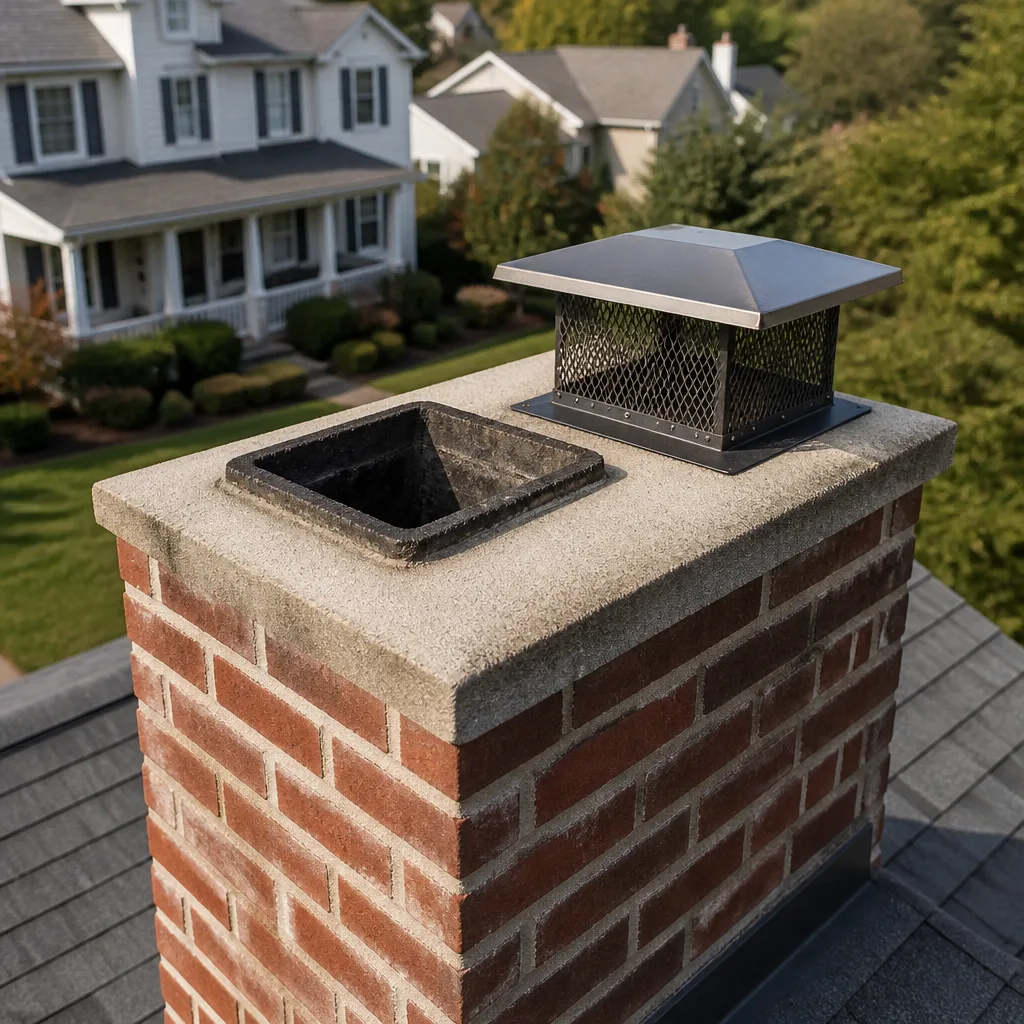 Sweep & inspection
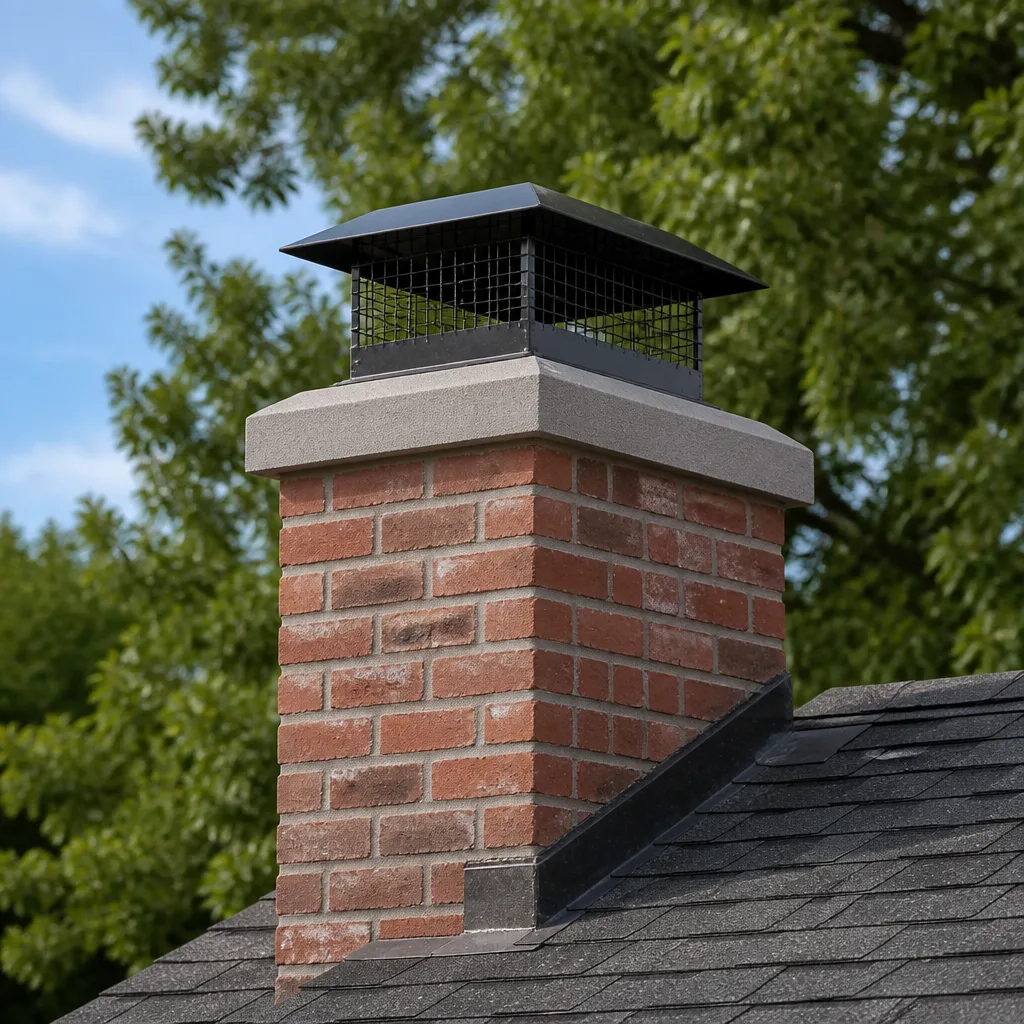 Caps & crowns
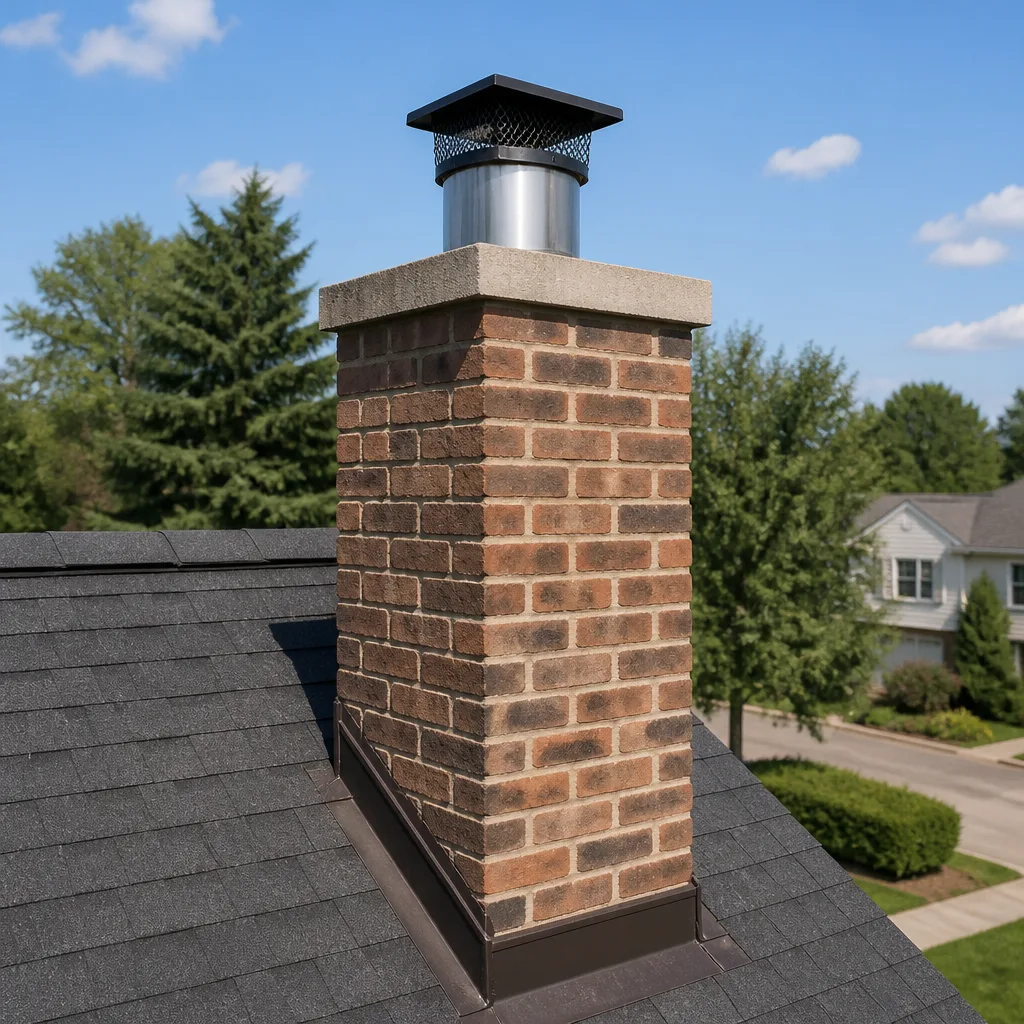 Flue relining
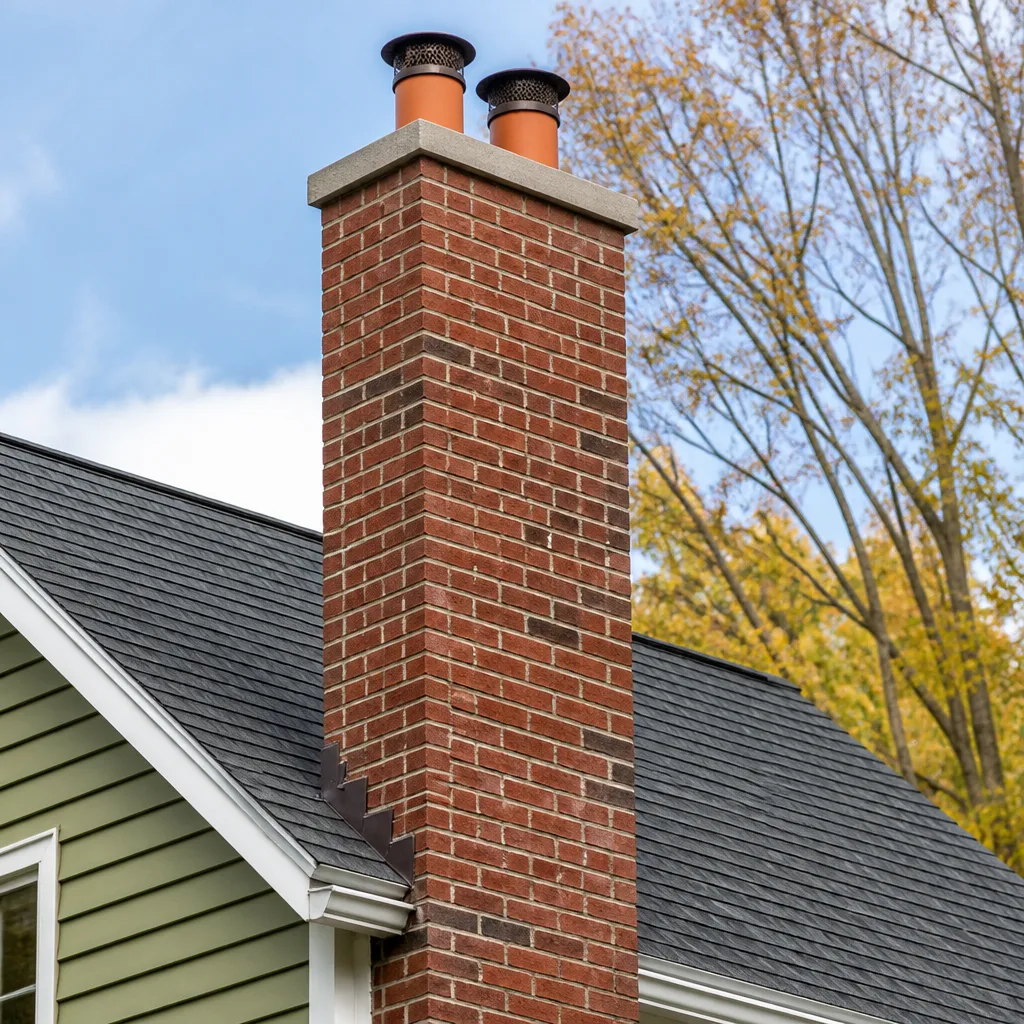 Masonry repair
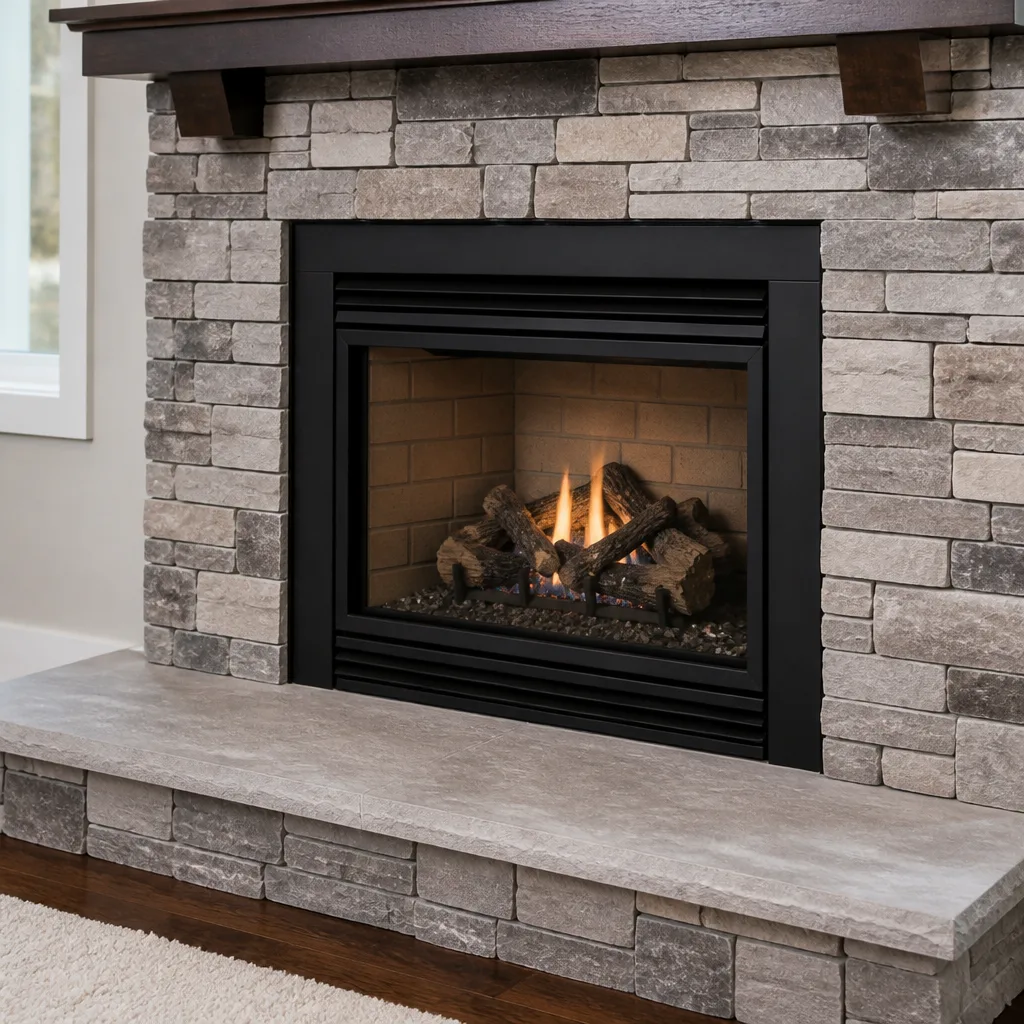 Gas fireplace service
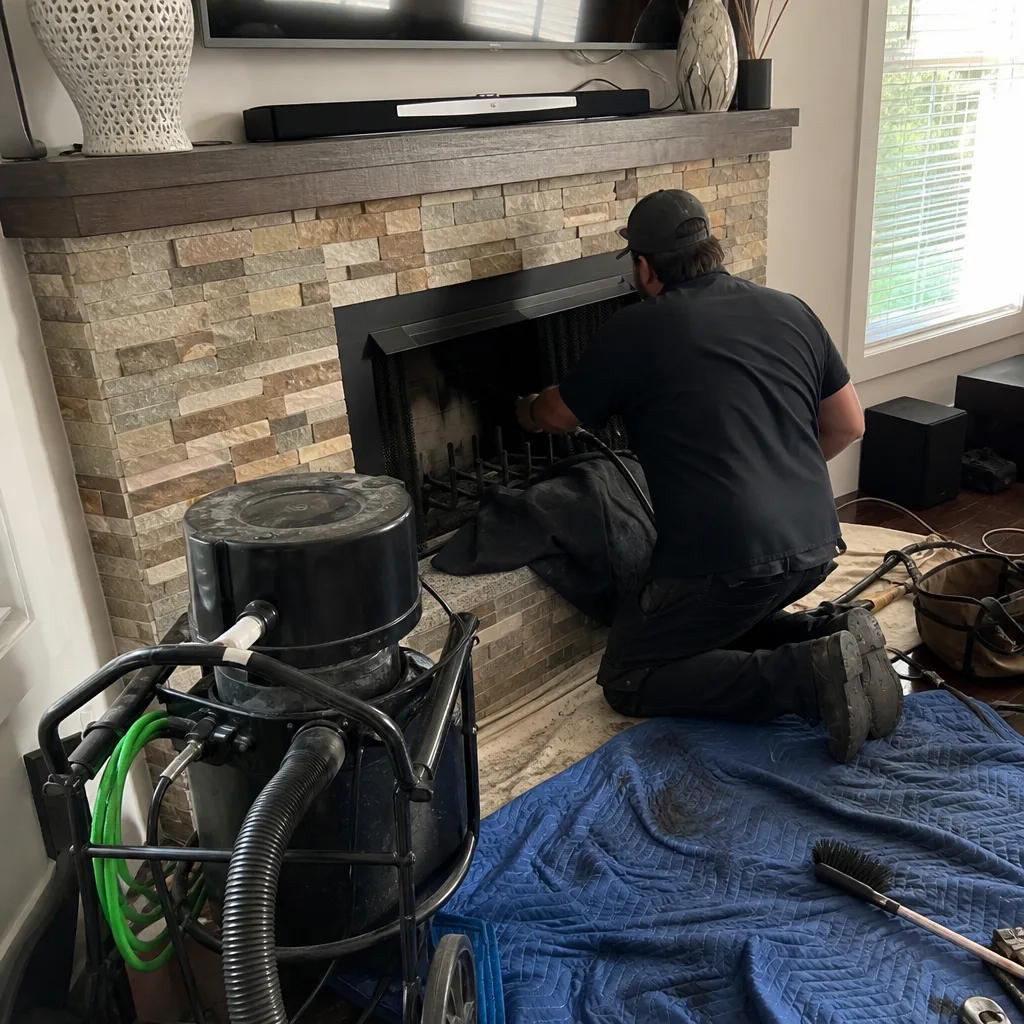
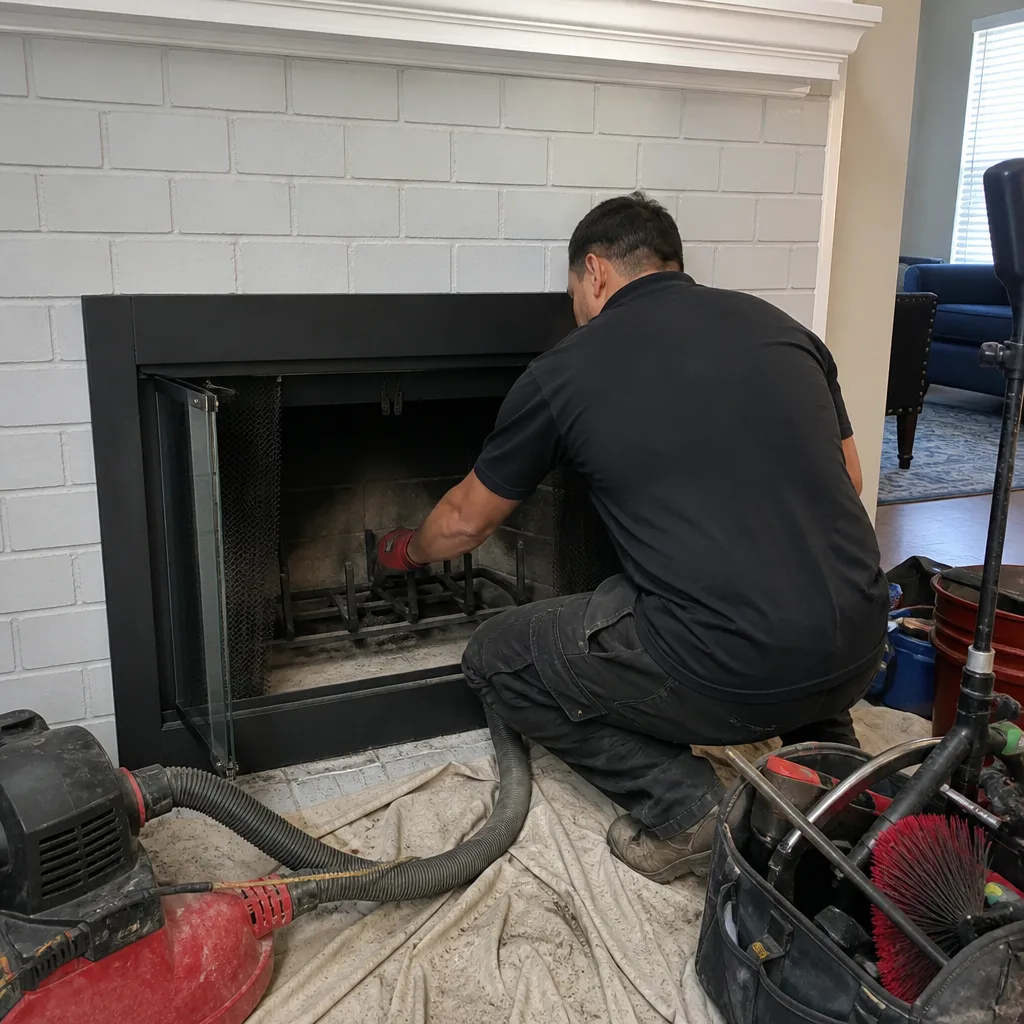
Level 1 sweep and inspection to the NFPA 211 annual standard - flue, crown, cap, and flashing checked and photographed
Chimney sweep logs do not sweep chimneys. They loosen some creosote - which then falls where a brush and vacuum still have to collect it.
Seasonal Chimney Cleaning Care for Orlando: Year-Round Homeowner’s Guide
The most expensive chimney repair calls in Orlando don’t come from heavy use. They come from homeowners who lit the first fire of the season without realizing something had moved in, cracked, or corroded during the previous nine months of silence. This guide walks through the actual chimney calendar Central Florida demands: one short burn window, nearly four months of summer dormancy risk, hurricane debris season, and two critical inspection points most Orlando homeowners never schedule. By the end, you’ll know exactly what to check, when to check it, and why a September cleaning beats a December one every single time in Orlando.
Quick Answer
Orlando chimney care is built around a 4-month burn window (roughly November through February) followed by a 9-month off-season where humidity, wildlife, and hurricane debris do the real damage. The most important seasonal maintenance step is a pre-season inspection and cleaning between late September and early October, before the first cold snap, not after. A second post-season check in February or March catches moisture damage before summer humidity locks it in for another eight months. A standard sweep and inspection in Orlando typically runs $179 to $329 depending on flue condition and roof access.
Styles & brands we work with
Table of Contents
- Orlando’s Real Chimney Calendar: One Burn Window, Nine Months of Waiting
- The Summer Dormancy Risk Window (May Through August)
- Hurricane Debris Season and Your Chimney Cap
- The October Pre-Season Checklist: Four Checks That Catch Everything
- Why September Scheduling Beats December in Orlando
- February Post-Season Close-Up: Protecting the Next Nine Months
- What Seasonal Chimney Care Actually Costs in Orlando
Orlando’s Real Chimney Calendar: One Burn Window, Nine Months of Waiting
Orlando homeowners use their fireplaces differently than people in Atlanta, Charlotte, or anywhere with a defined autumn. Here, the burn window is short and concentrated: a few cold fronts between late November and late February, maybe 15 to 25 fires total across the season. That’s not a criticism. It’s the reason Orlando chimney problems look different than northern ones.
When a chimney sits unused for months in Central Florida, three things happen. First, creosote from last season’s fires absorbs moisture from the air and degrades into a heavier, more corrosive form. Second, the flue becomes a migration path for squirrels, raccoons, birds, and chimney swifts looking for a dry cavity. Third, small cracks in masonry or crown work stay small only if something catches them early. In Orlando’s humidity, a hairline crack that would sit harmlessly in a dry climate becomes a water channel by late summer.
We see the same pattern in service calls across Orlando neighborhoods. A homeowner lights the first fire of the season in early December, notices a faint smell or a draft problem, and calls us. By then, whatever caused the issue has had eight to nine months to get worse. The fix that could have been a $229 sweep and minor cap repair in September becomes a flue repair or crown rebuild in December.
Understanding that one fact changes how you maintain a chimney in Orlando. You stop treating the fireplace as a December appliance and start treating it as a 12-month home system with one short usage window.
The Summer Dormancy Risk Window (May Through August)
Between May and August, Orlando’s heat and humidity create what we call the dormancy risk window. Your chimney is not being used, but it is not resting either. Inside an uncapped, unchecked flue, the summer months are the most active period of the entire year for deterioration.
Here’s what happens inside a typical Orlando chimney during those four months. Average relative humidity sits between 74 and 78 percent. Creosote, the black residue from last winter’s fires, is hygroscopic. It pulls moisture from the air. That moisture mixes with creosote’s acidic compounds and creates a mild acid that sits against the flue liner, day after day, month after month. In a clay tile liner, this accelerates spalling. In a metal liner, it promotes corrosion. Neither process is visible from the living room.
Meanwhile, if the chimney lacks a proper cap or the cap’s mesh is damaged, the flue becomes a refuge. Chimney swifts nest in Orlando flues from April through August. Squirrels enter through damaged caps or gaps in the chase top. Raccoons will exploit any opening large enough for their head. Each animal brings organic material: twigs, leaves, nesting fibers. Those materials block airflow, trap humidity, and create conditions for a chimney fire when the next season’s first fire is lit.
The practical takeaway: the most useful thing you can do for your chimney in May is look at it from the ground. Check whether the cap is still in place, whether the crown looks cracked, and whether you see any staining on the exterior masonry. If anything looks off, schedule an inspection before August. That’s also why we recommend a professional chimney inspection in Orlando during the off-season, when crews can take their time and homeowners get better scheduling flexibility.
Hurricane Debris Season and Your Chimney Cap
Hurricane season runs June 1 through November 30. Orlando’s inland position doesn’t mean the chimney escapes what a storm leaves behind. High winds drive palm fronds, roofing debris, twigs, and plastic into vertical surfaces. The chimney stack catches everything that’s airborne below the roofline, and the cap takes the impact.
We regularly see three kinds of hurricane-season chimney damage in Orlando. First, bent or dented caps. A palm frond moving at 70 miles per hour carries enough force to compromise a standard cap’s mesh or lid. Second, displaced chase tops on wood-framed chimney enclosures. Third, water intrusion through crown cracks that existed before the storm and widened under wind-driven rain. None of these announce themselves loudly. A damaged cap looks almost unchanged from the ground.
What should an Orlando homeowner do after a significant storm? A visual check from the ground for obvious displacement. Look for a cap that’s tilted, a chase top that’s lifted, or masonry chunks on the roof deck. If you see anything, schedule an inspection before the next major rain. Water entering a chimney structure in Orlando doesn’t dry out the way it does in arid climates. It sits, soaks into the clay tile or the firebrick, and starts a cycle that ends with spalling brick and deteriorating mortar joints.
One more seasonal note: the window between August and October is when we see the highest demand for cap replacements and crown repairs in Orlando, and that’s a good thing. It means homeowners caught seasonal damage before the burn season started.
The October Pre-Season Checklist: Four Checks That Catch Everything
Between late September and early November, before the first real cold front, is when every Orlando fireplace should get its annual check. Here’s the four-part checklist we recommend, and what each check actually catches.
- Damper function check. Open and close the damper fully. It should move smoothly and seat fully in both positions. A damper that won’t close completely allows conditioned air to escape all summer and can let in rainwater. A damper that won’t open creates a smoke problem on the first fire. This check catches rusted hinges, warped plates, and debris blocking the mechanism.
- Cap and crown visual inspection. From the roof or with a camera, inspect the chimney cap for intact mesh, a centered lid, and secure mounting. Inspect the crown for cracks or separated joints. This check catches the animal entry points and the water intrusion paths that cause most expensive Orlando chimney repairs.
- Firebox crack scan. Look at the firebrick and mortar joints in the firebox. Hairline cracks smaller than a dime are common and usually cosmetic. Anything wider than about 1/8 inch, or any crack that changes size between the cold chimney and a burning fire, deserves professional evaluation. This check catches failing firebrick before it becomes a structural concern.
- Smoke test. Light a small piece of newspaper and hold it near the open damper. The smoke should draw up the flue evenly and steadily. A lazy smoke pattern, or smoke that pushes back into the room, indicates a drafting problem: a blocked flue, a cold chimney that needs preheating, or improper flue sizing.
Each of these checks is part of what a professional chimney sweep in Orlando performs during a standard service visit. But knowing what each check is looking for helps you understand what’s happening in your own home, and it means you can do the first three from the ground or the hearth before you ever pick up the phone.
Why September Scheduling Beats December in Orlando
Every year we watch the same Orlando scheduling pattern. Calls start trickling in during October, pick up through November, and peak in the first two weeks of December. Here’s what that means in practical terms. A homeowner who calls in September gets their choice of appointment times, a technician who can spend extra time explaining findings, and a fully resolved issue before the first fire is lit. A homeowner who calls in December waits one to three weeks for availability, often spends the first cold front without a working fireplace, and sometimes discovers a repair need in the middle of peak season.
There’s also a pricing reality. Flat-rate pricing at Kindling Chimney Orlando does not change with the season. But scheduling early has a different financial advantage: catching a small issue in September, when repair parts are plentiful and crews are less stretched, is cheaper than catching the same issue in December when it has become a larger problem requiring more labor and materials.
The ideal Orlando scheduling rhythm looks like this: schedule your sweep and inspection the last week of September or the first two weeks of October. That places you ahead of the first cold snap, typically mid-to-late November in this part of Central Florida. If the inspection turns up a needed repair, you still have four to six weeks to schedule it before you actually need the fireplace.
Some Orlando homeowners tell us they wait because they want to coordinate the chimney service with other home maintenance. That’s understandable, but fireplaces don’t care about convenience. When the first 40-degree night hits in November, the difference between a September appointment and a December one becomes very tangible.
February Post-Season Close-Up: Protecting the Next Nine Months
The second most important moment in the Orlando chimney calendar comes right after the last fire of the season, usually mid-to-late February. This is the step most homeowners skip, and it’s the one that matters most for preventing next year’s damage.
A post-season close-up does four things. First, it removes the season’s creosote while it is still relatively fresh, before the Orlando summer humidity begins turning it into the acidic, corrosive form that attacks liners during dormancy. Second, it includes a final visual inspection that identifies small cracks or water intrusion before the rainy season starts. Third, it gives you the chance to confirm the cap is in proper condition ahead of hurricane season. Fourth, it allows for any minor repair or re-caulking that will prevent water damage while the chimney sits unused for the next eight months.
Here’s the simple post-season sequence we recommend.
- After the last fire, let the chimney cool for 48 hours.
- Visually inspect the firebox and the visible portion of the flue from the hearth.
- Close the damper firmly and confirm it seats properly.
- Check the cap and crown from the ground or the roof.
- Schedule a professional sweep and inspection if any of the above shows a concern, or if you’ve burned more than 20 fires during the season.
- Note any change in draft, odor, or animal activity during the spring and summer months.
This is also the right time to address any fireplace repair in Orlando that surfaced during the burn season. A small crack that appeared in December will not get better by waiting until October. Fixing it in February or March spreads the cost across the off-season and means you enter the next burn window completely ready.
What Seasonal Chimney Care Actually Costs in Orlando
Orlando chimney service pricing is consistent with the Southeast regional market. You should expect transparency, not surprises. For a detailed look at what drives these numbers, see our Chimney Cleaning Cost Breakdown: The Orlando Homeowner’s Reference for 2026. Here’s what we tell homeowners before any work begins.
| Service | Typical Orlando Price Range | What’s Included |
|---|---|---|
| Standard chimney sweep | $179 – $249 | Flue brushing, visual inspection, basic cap check |
| Sweep + full inspection (recommended) | $229 – $329 | Complete sweep, camera or visual flue inspection, damper function check, firebox scan, cap and crown assessment |
| Level 2 inspection (after real estate transaction or storm) | $299 – $449 | Everything in Level 1 plus roof access, chase top check, more thorough flue evaluation |
| Chimney cap replacement | $189 – $489 | Depending on cap size, material, and roof access |
These are honest Orlando ranges, not bait pricing. A sweep that requires special roof access or addresses a heavily creosoted flue can run higher, and the technician should always tell you the written price before any work begins. That’s not a courtesy at Kindling Chimney Orlando. It’s the standard on every visit.
One more piece of seasonal cost advice: the most expensive chimney problem in Orlando is not a dirty flue. It’s water damage. A failed crown or a missing cap lets rainwater into a chimney structure, and the repair chain quickly becomes: water-damaged liner, spalled brick, rotted chase framing, and mold in adjacent drywall. A $300 cap replacement in October prevents a $3,000 to $7,000 structural repair in March. In this climate, water is the enemy, and the cap is your first line of defense.
Common Mistakes to Avoid
- Skipping the pre-season inspection because “it worked fine last year.” What worked fine in February may have been compromised in August by a squirrel, a storm, or a slow leak that had nine months to grow. A $49 visual check is cheap insurance against a $2,000 repair.
- Burning the first fire before checking the flue. In Orlando, critters and debris accumulate in unused flues. If a bird has built a nest in your flue since February, that first fire is a chimney fire waiting to happen.
- Treating the chimney as a winter-only concern. The summer months are when most Orlando chimney damage actually occurs. Homeowners who only think about their chimney in December are always reacting instead of preventing.
- Skipping the post-season close-up. Creosote left in a flue through Orlando’s humid summer becomes more acidic and more damaging. A February cleaning is genuinely preventive; a December cleaning is often corrective.
- Ignoring a small cap issue. A slightly bent cap mesh or a loose lid is how squirrels enter an Orlando chimney. Once inside, they chew wiring, build nests in flues, and sometimes die in the smoke shelf, creating an odor problem that’s expensive to resolve.
- DIY-ing repairs with hardware store caulk and paint. Chimney crowns and caps require specific materials rated for flue temperatures and weather exposure. Household caulk fails within a season in Orlando’s heat and humidity.
- Waiting until the cold snap to schedule. Orlando’s chimney service demand peaks the week of the first hard freeze. Scheduling in September or October gets you prompt service and a fully resolved chimney before you need it.
See the difference
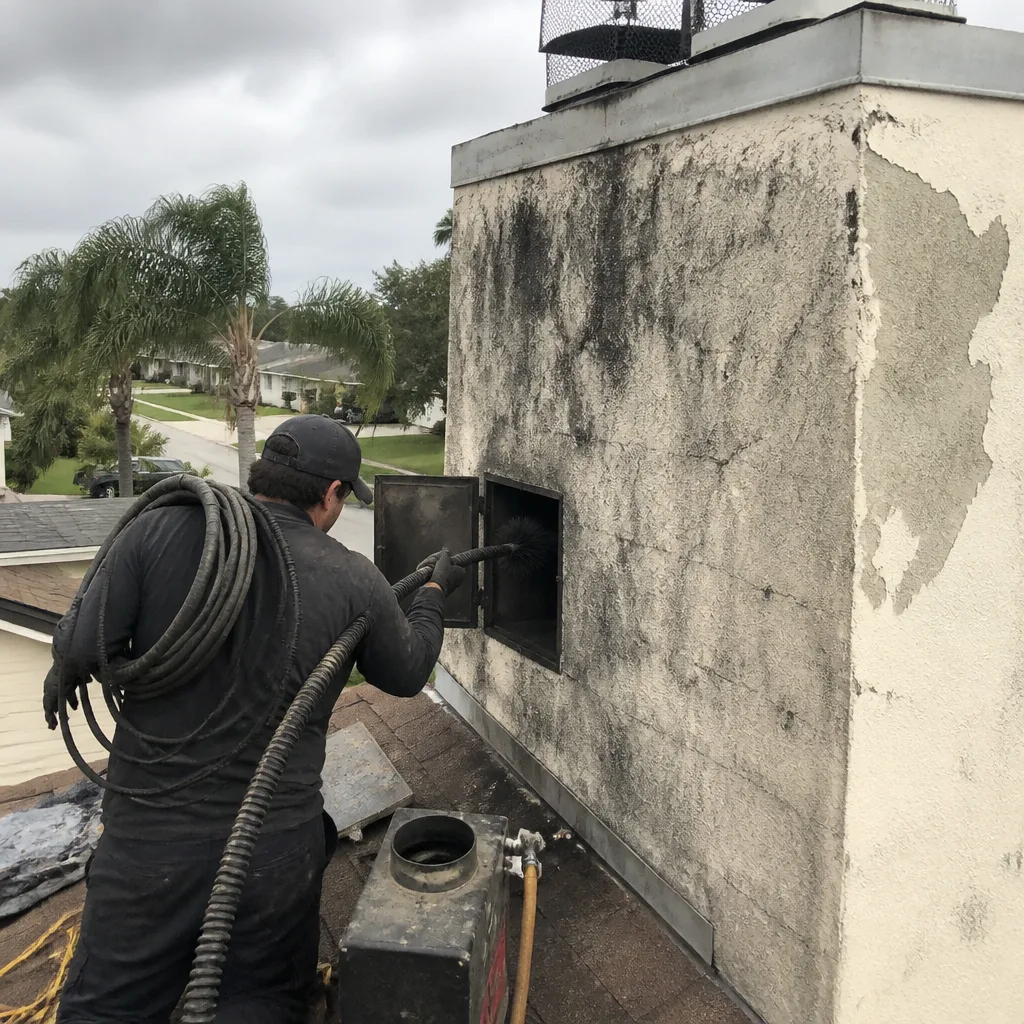 Before
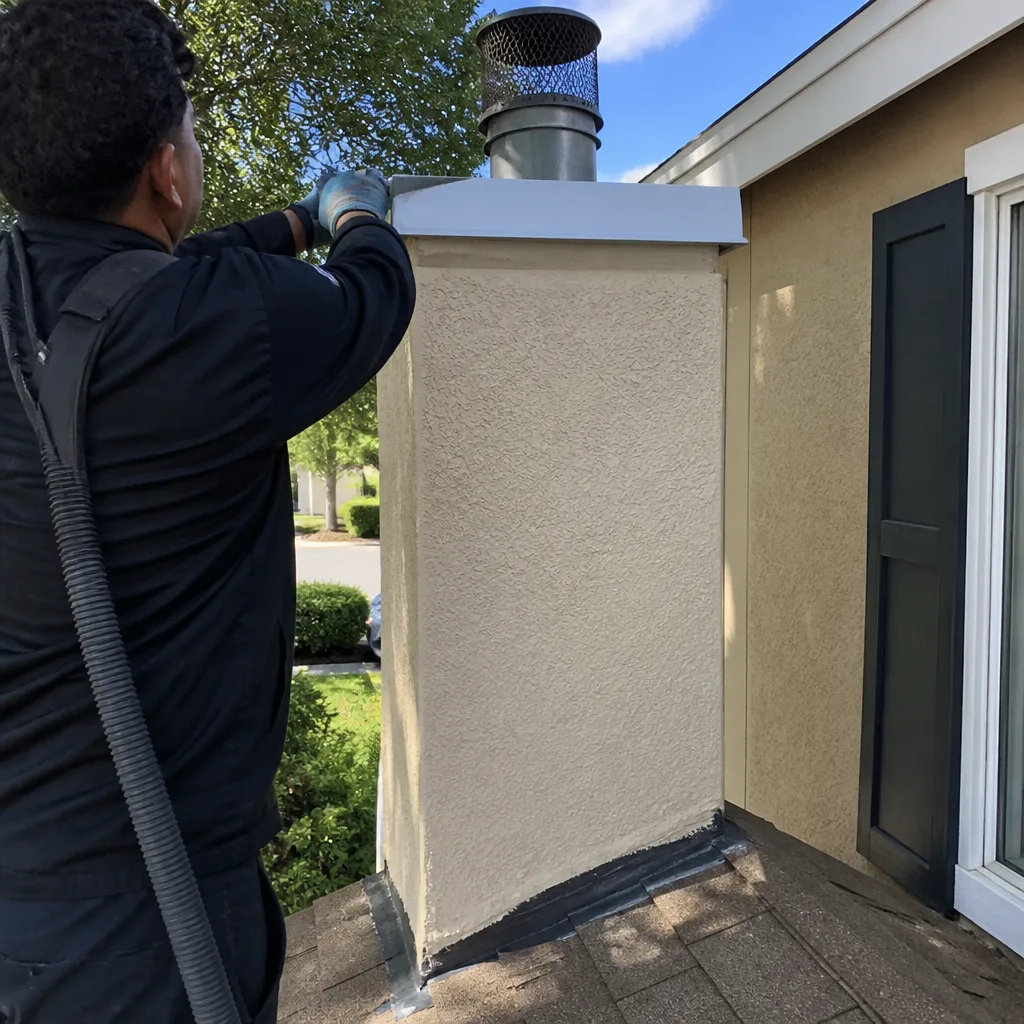 After
After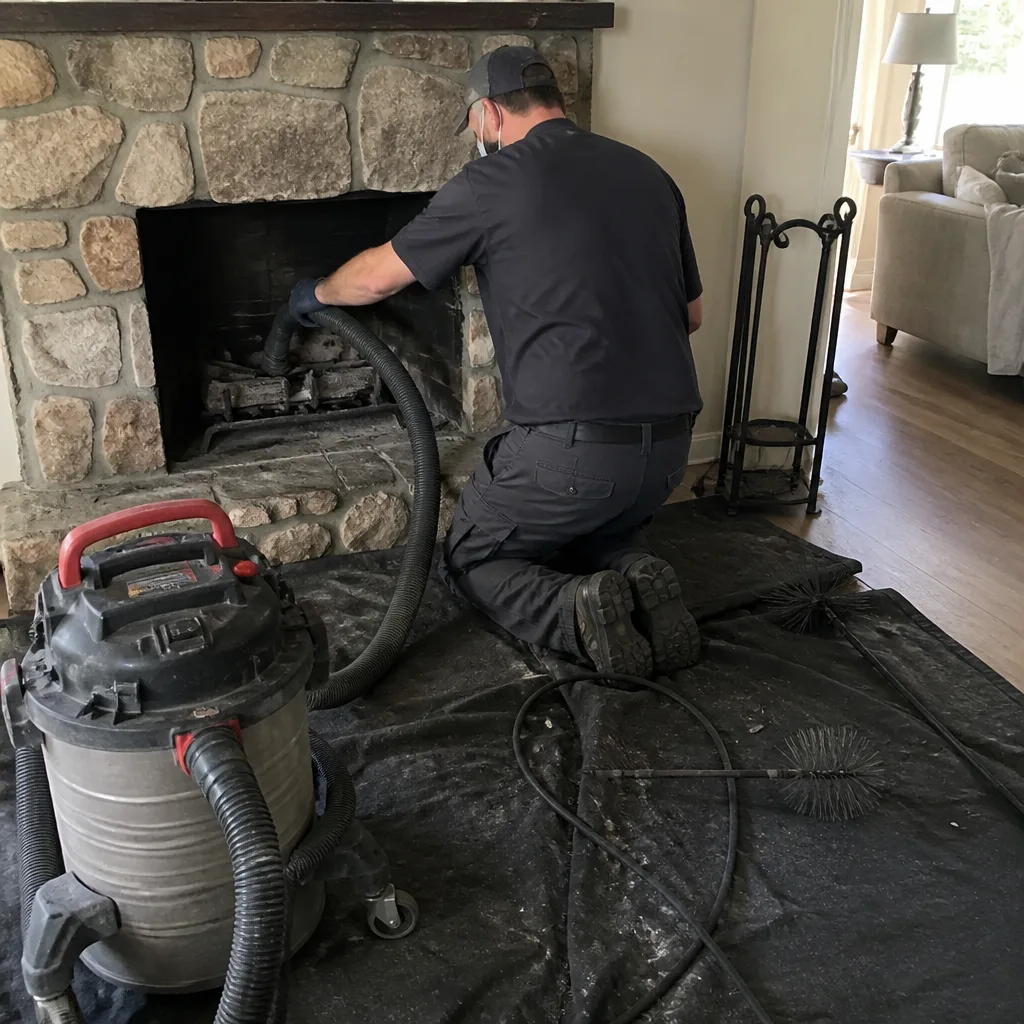 Before
 After
After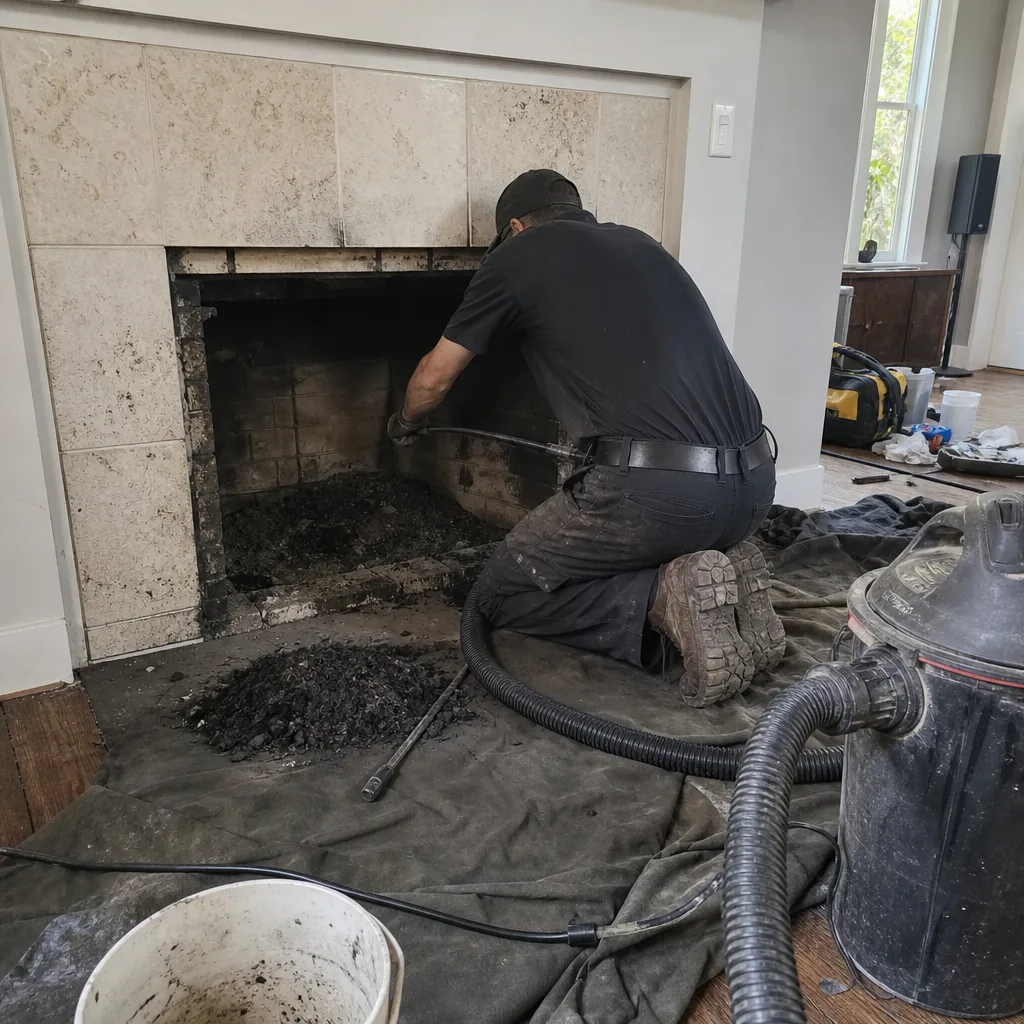 Before
 After
AfterWhen to Call a Professional
Call a chimney professional when you see any of these warning signs: a crack wider than 1/8 inch in the firebox during or after a fire; smoke entering the room despite an open damper; visible damage to the cap or crown after a storm; a strong odor from the fireplace during summer; signs of animals such as droppings, nesting material, or scratching sounds; or significant water staining on the ceiling near the chimney chase. For the full list, read our Chimney Cleaning Warning Signs: A Orlando Homeowner’s Reference Guide.
We’ve built our seasonal service model in Orlando around the reality that homeowners need honest answers before they commit to spending money. Sometimes the honest answer is “your chimney is fine, and you can wait another year.” Other times, the camera shows a flue condition that needs attention now. Either way, the assessment is thorough, the price is written before work begins, and the crew leaves with a photo of the clean-up. Kindling Chimney Orlando offers free estimates throughout Orlando. Call (850) 940-3442 to talk through your seasonal chimney needs with a live person.
Frequently Asked Questions
Once per burn season is the minimum recommendation for Orlando homeowners who use their fireplace regularly, meaning a sweep before the season starts in September or October. If you burn more than 20 fires in a winter, or burn unseasoned wood, schedule a mid-season check as well. Even with light use, an annual inspection is worthwhile because the summer dormancy months create separate risks from critters, humidity, and storm damage.
Creosote accumulates, animals get another year to move in, and small water intrusion points go unaddressed for another 12 months of Orlando humidity. The result is not always dramatic, and we’re not in the business of scaring anyone. But skipping a year means whatever condition existed in February goes unexamined until the following October, and in this climate, conditions get worse during the off-season, not better. For exact pricing on what a sweep would cost for your specific flue, call (850) 940-3442.
Yes, and in Central Florida it’s non-negotiable. An uncapped flue is an open invitation to chimney swifts during mating season, squirrels and raccoons year-round, and Orlando’s wind-driven rain during summer thunderstorms. Before installing or replacing one, check local requirements in our Chimney Cleaning Permits, Codes & Inspections in FL: What You Need to Know. A standard cap costs under $500 installed in most cases. The animal removal, flue damage, and masonry repair that an uncapped flue eventually requires typically runs several times that amount.
We don’t recommend it, because the actual point of a professional chimney sweep in Orlando is not just brushing creosote. It’s the inspection that happens alongside the cleaning: the damper function check, the firebox crack scan, the cap and crown assessment, the draft evaluation. A homeowner can buy a brush and remove some creosote. What they can’t do from the ground is evaluate the hidden condition of their flue. And chimney sweeping involves working on a roof, which carries real fall risk. A trained professional with proper equipment and fall protection is the right call. Get a free estimate at (850) 940-3442.
In Orlando, we recommend against it. The off-season here is nearly nine months long, and that’s plenty of time for a bird to nest in the flue, a squirrel to create a blockage, or debris from a storm to settle against the damper. A pre-season sweep removes the risk of a chimney fire from an obstructed flue and confirms the system is safe before the first fire. The cost is modest compared to the consequences of discovering a blockage with a lit fire.
A standard sweep and inspection typically takes 60 to 90 minutes, depending on roof access, chimney height, and how much creosote has accumulated. Most Orlando homes have single-story chimneys with straightforward roof access, which keeps appointments on the shorter end. The technician will also need a few minutes inside the home to check the damper and firebox and to set down shoe covers and drop cloths before any work begins.
The Bottom Line
Orlando chimney care is not a four-season chore. It’s a two-point calendar: one pre-season assessment in September or October, and one post-season close-up in February. The months in between are when the real damage happens, driven by humidity, wildlife, and storm debris. Homeowners who understand this pattern schedule their chimney maintenance ahead of the cold snap, catch small problems before they become structural ones, and spend less over the life of their home than the ones who light the first December fire and hope for the best. That’s the whole equation. It’s not complicated, and in this climate, it saves real money. For more guides & resources on keeping your chimney safe year-round, visit our blog.
Written by Danny Cortes, Owner at Kindling Chimney Orlando, serving Orlando since 2003.